This guide supports water testing and treatment projects in Kenya. Use it to prepare the information needed for a site-specific discussion and to compare proposed work on a consistent basis.
Keep the system and its records useful
Keep original laboratory reports, treatment configuration, consumable specifications, operating instructions, service intervals and the schedule for treated-water verification.
The information to collect
Understand water quality before choosing treatment equipment or deciding how the water may be used. Sampling, accredited laboratory analysis and a clear treatment objective come before a filter or reverse-osmosis quotation.
- Sampling plan and laboratory coordination
- Review of results against the intended water use
- Treatment options and operating-cost comparison
- Installation scope, commissioning checks and a follow-up testing plan
A practical review process
First, name the intended outcome and the person responsible for approving the design or scope. Gather the existing site records and mark anything that is an estimate. Ask the provider to explain which missing measurements could change the recommended equipment or work.
Next, compare the proposed deliverables with the actual requirement. Keep the quotation, specification and acceptance criteria together. If the design changes after assessment or testing, record what changed and approve the revised scope before proceeding.
Avoid a misleading comparison
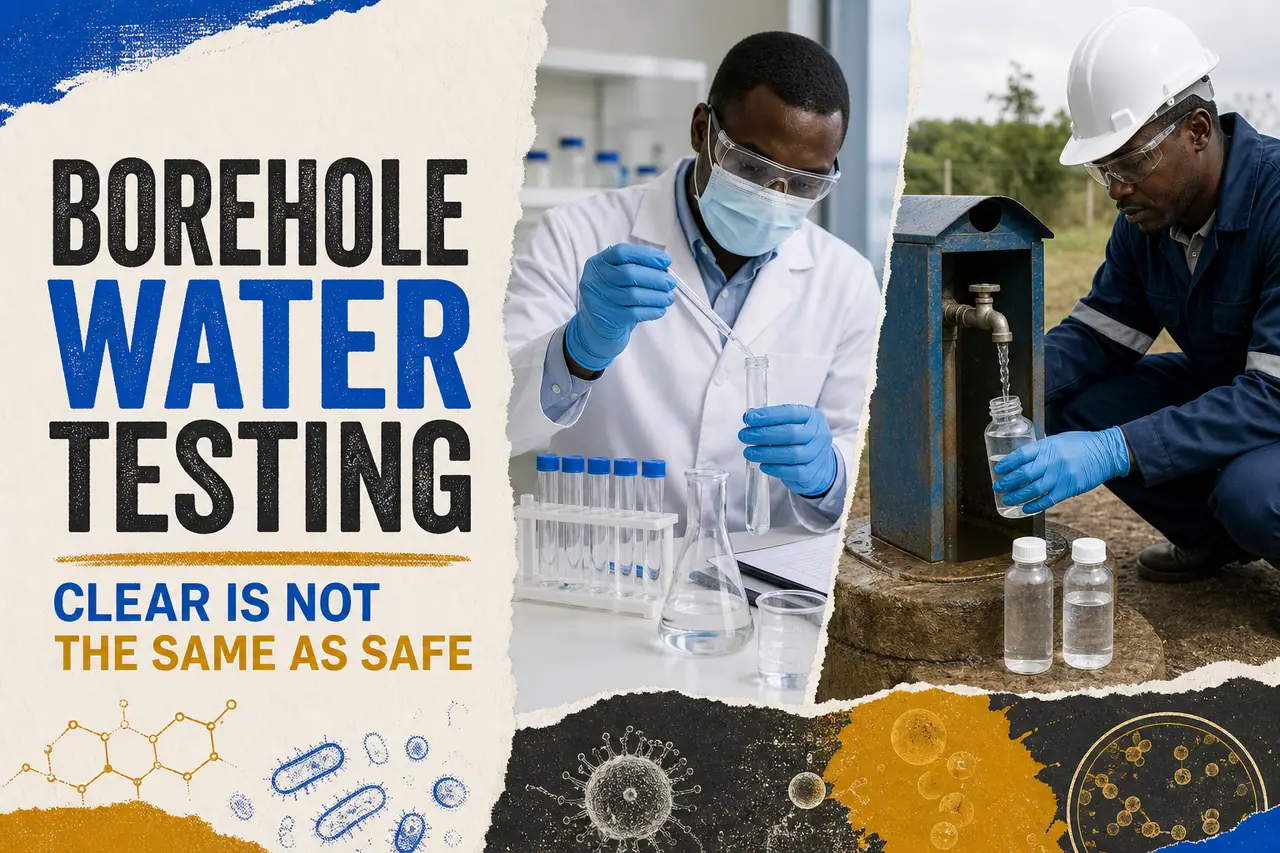
Clear water is not proof that it is safe to drink. A handheld TDS meter cannot identify every microbiological or chemical issue. Treatment must address the laboratory findings and be checked after commissioning.
Testing panels, treatment capacity, contaminant profile, consumables, reject-water management, electricity and planned maintenance all influence lifetime cost.
Check the result at handover
Keep original laboratory reports, treatment configuration, consumable specifications, operating instructions, service intervals and the schedule for treated-water verification.
Adapt the brief to your site and audience
A household may prioritise simple operation and reserve supply. A school or NGO may need operator training, beneficiary or occupancy information and procurement records. A farm needs its irrigation or livestock demand defined. A diaspora-funded project also needs clear local access and remote approval responsibilities.
Continue with water testing and treatment, county planning guidance and a project enquiry.
Does this guide replace a site assessment?
No. It is a planning checklist. Final engineering, water-use decisions and equipment selection depend on measured conditions and the responsible professionals’ assessment.
What should I send when requesting a quote?
Start with your Kenyan site location, intended use and existing records. For this service, prioritise intended use: drinking, domestic supply, livestock, irrigation or process water and existing laboratory results and known taste, staining or corrosion problems.