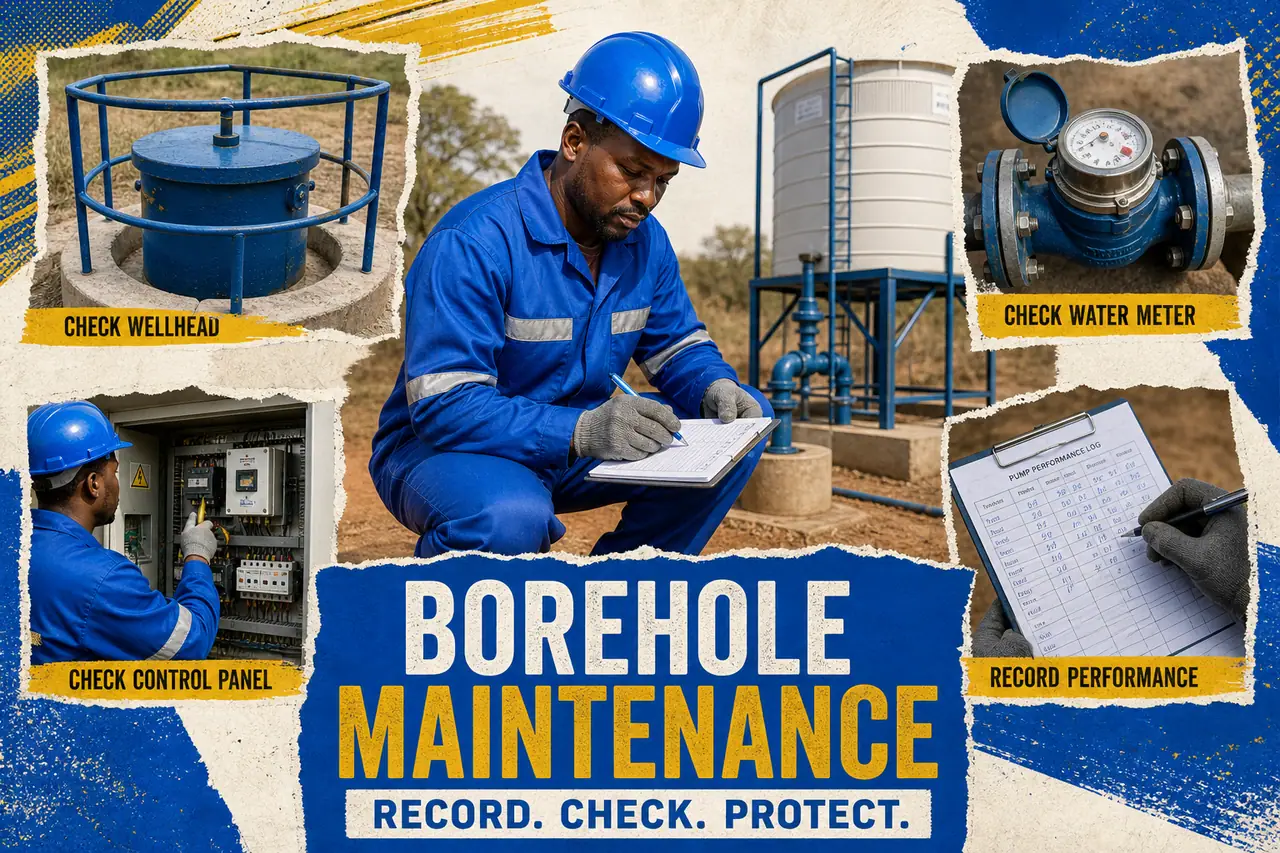
Investigate falling performance before replacing major equipment or drilling again. Rehabilitation starts by separating source, construction, pump, power and pipeline problems using the available records and measured conditions.
Start with a clear site brief
Compare measurements under similar operating conditions. A change in tank demand or solar input can look like a borehole problem; confirm the supply, pump and pipeline conditions before assigning a cause.
- Previous yield tests, water levels and equipment records
- The date and pattern of reduced flow, sand, noise or repeated trips
- Current electricity or solar controller readings
- Maintenance history and changes in surrounding water demand
What the service can include
The final quotation should identify the work included, the documents supplied and the responsibilities that remain with the owner. We develop the scope from your site information and assessment findings rather than assuming one package suits every project.
- Initial performance and equipment assessment
- Borehole inspection options where access and conditions permit
- A cause-based cleaning or rehabilitation proposal
- Post-work testing and a revised maintenance plan
What determines the cost?
Access, pump removal, inspection, specialist cleaning, disposal, replacement components and verification testing affect rehabilitation cost.
Compare quotations on the same basis. Ask whether mobilisation, materials, testing, taxes, commissioning and aftercare are included. Where the work depends on findings that are not yet available, agree how the price or design will be updated before the next stage.
What to check before committing
There is no universal cleaning method and no guaranteed recovery percentage. The proposed method must suit the borehole materials, suspected obstruction and condition. Uncontrolled treatment can damage a source.
A useful handover
Compare before-and-after discharge and water levels under documented conditions. Keep the work record and agree on monitoring that can identify a future decline early.
Nominate the person who will operate or maintain the system and make sure they can explain the normal operating sequence, when to isolate equipment and who to contact if readings or performance change.
For your property or organisation
We plan projects for homes, farms, NGOs, schools, public institutions and businesses. Kenyans living abroad can nominate a local representative and agree documented approvals before work starts. The site remains in Kenya; your residence country helps us coordinate communication.
Find your county planning page or choose the guide for your organisation.
Questions to ask
Can you quote before visiting the site?
We can discuss an initial scope from your records and objectives. A firm installation or construction scope may require an assessment and the missing technical information. Any initial estimate should state its assumptions.
Which county do you cover?
Send the project county, nearest town and site pin. We confirm access, mobilisation and the practical delivery arrangement for the requested work before accepting the scope.
Can a Kenyan abroad coordinate the project?
Yes. Agree one authorised decision maker, a local access contact and the evidence needed for each milestone. State your residence country and time zone on the enquiry form.