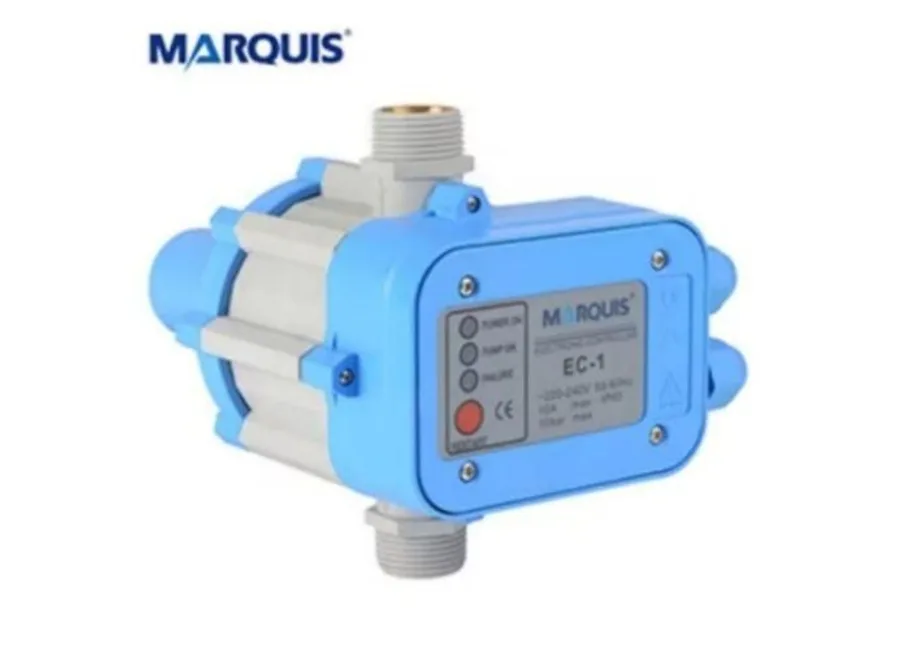
pressure switch for water pump searches usually happen when a pump cycles too often, will not start, will not stop, or a new pressure system is being assembled. This guide explains what a pressure switch does, how it works with a pressure tank and pump, which specifications matter, what can cause false diagnoses, and how to compare the complete installed system before buying.
Why pressure switch for water pump problems are often misdiagnosed
A pressure switch is only one component in a pressurised water system. Frequent cycling can come from a failed pressure vessel, incorrect pre-charge, a water leak, unsuitable pump flow, a blocked filter, a faulty non-return valve or control wiring. A pump that will not stop may be unable to reach the cut-out pressure because the hydraulic system itself cannot deliver it.
That is why replacing a pressure switch for water pump should follow basic diagnosis rather than trial-and-error parts changing. Read low borehole water pressure Kenya and borehole maintenance if the symptom has not yet been isolated.
Pressure switch for water pump: what it actually does
In a conventional fixed-speed pressure system, the switch senses system pressure and changes the electrical control state at selected pressure points. When pressure falls to the cut-in point, the pump is commanded to start. When pressure rises to the cut-out point, the pump is commanded to stop.
The exact arrangement depends on the pump motor, electrical supply and control design. A small switch may directly control an appropriate load, while a larger motor may require the switch to operate a contactor or control circuit instead of carrying full motor current. Never assume that physical fit alone proves electrical suitability.
The Borehole Drillers Kenya catalog currently lists an Adjustable Pump Pressure Switch with adjustable cut-in/out, a ¼-inch connection, single-phase contact and protective cover. The live catalog price is KSh 3,200.
Pressure switch for water pump and pressure-tank interaction
The switch and pressure tank work together. The pressure vessel provides usable drawdown between pump starts, while the switch defines the pressure range for a traditional fixed-speed system. If the tank has too little usable drawdown, the switch may operate frequently even when it is functioning correctly.
Use pressure tank price in Kenya to understand drawdown, pre-charge and cycling before blaming the pressure switch for water pump.
Cut-in and cut-out pressure explained
Cut-in is the pressure at which the control calls for the pump to start. Cut-out is the pressure at which it calls for the pump to stop. The difference between the two values is often called the differential. The settings must suit the pump’s ability, pressure-vessel pre-charge, pipework, fixtures and safe system rating.
In plain English, pressure differential is cut-out pressure minus cut-in pressure. A wider or narrower range changes how the system behaves and should not be adjusted without considering the rest of the installation.
The pump must also be capable of reaching the chosen cut-out pressure at the actual operating flow and head. If it cannot, the switch may never open even though the switch itself is healthy.
Pressure switch for water pump and total pump duty
A borehole or booster pump has to overcome static elevation, friction losses and required outlet pressure. The pressure switch for water pump does not create pressure; it only reacts to the pressure the hydraulic system achieves.
If the pump is undersized for the required duty, raising switch settings will not solve the problem. It can instead create a system that runs continuously without reaching cut-out. Use borehole pump sizing in Kenya to review flow and total dynamic head before changing pressure targets.
In plain English, total head combines elevation, pipe losses and the pressure you need at the delivery point. The pump and control settings must be compatible with that complete duty.
What to compare before buying a pressure switch for water pump
| Specification | What to check | Why it matters |
|---|---|---|
| Pressure range | Adjustable cut-in and cut-out capability | Must suit the intended operating range |
| Connection | Thread size and fitting arrangement | Must connect without unsafe improvisation |
| Electrical contact rating | Voltage, current and intended control method | Must suit direct load or contactor control as designed |
| Phase/control type | Whether the switch is suitable for the control architecture | Prevents electrical mismatch |
| Enclosure | Protective cover and installation environment | Helps protect live/control components |
| Adjustment method | How settings are changed and documented | Supports safe commissioning |
| Spare availability | Replacement model and local support | Reduces downtime later |
Pressure switch for water pump price in Kenya
The live Borehole Drillers Kenya catalog currently lists the Adjustable Pump Pressure Switch at KSh 3,200. The product listing describes adjustable cut-in/out, a ¼-inch connection, single-phase contact and a protective cover. Confirm current stock, electrical suitability and the exact switch model before ordering.
| Scope | Current/indicative price | What to confirm |
|---|---|---|
| Adjustable Pump Pressure Switch | KSh 3,200 | Current stock, model and electrical compatibility |
| Switch + gauge + fittings | $— | Manifold/tee, gauge, nipples and isolation |
| Switch + pressure tank commissioning | $— | Pre-charge, cut-in/out and leak checks |
| Complete booster-control service | $— | Pump, tank, controls, wiring and commissioning |
When a pressure switch for water pump is probably not the main fault
If the pump starts and stops rapidly, first check whether the pressure tank is waterlogged, incorrectly pre-charged or too small for the operating strategy. If the pump runs continuously, check for leaks, open outlets, blocked intake conditions, low source level, unsuitable pump sizing or a cut-out target the pump cannot achieve.
If pressure rises correctly on the gauge but the pump does not stop at the intended setting, the pressure switch for water pump becomes a stronger suspect. If pressure itself never reaches the target, investigate the hydraulic system before replacing the switch.
Pressure gauge readings make diagnosis easier
A working pressure gauge helps separate a switch problem from a hydraulic problem. Record the pressure at pump start, pressure at pump stop, the time required to rise between those points and how quickly pressure falls when water is used.
If those values change suddenly from an established baseline, inspect the complete system. A pressure gauge and pressure switch for water pump together provide much more useful evidence than listening to pump starts alone.
Worked example: frequent cycling after a new switch
Imagine a homeowner replaces the switch because the pump is starting every few seconds. The new switch behaves exactly the same. A pressure-tank inspection then finds that usable drawdown is almost gone. The switch was responding correctly; the tank problem caused the frequent cycling.
This example shows why a pressure switch for water pump should be diagnosed in context. Replacing the cheapest component first can delay the real repair.
| Illustrative diagnostic scope | Relative evidence index |
|---|---|
| Switch only | 35 |
| Switch, tank and gauge | 72 |
| Complete system diagnosis | 100 |
Features of a good pressure-switch installation
| Feature | What good practice achieves |
|---|---|
| Correct pressure range | Matches desired service pressure and pump capability |
| Correct electrical interface | Prevents overloading the switch contacts |
| Accurate pressure gauge | Makes commissioning and troubleshooting measurable |
| Correct tank pre-charge | Supports usable drawdown and sensible cycling |
| Leak-free pressure connection | Allows the switch to sense actual system pressure |
| Documented settings | Creates a maintenance baseline |
| Accessible installation | Makes inspection and replacement practical |
Advantages of sizing and commissioning the pressure switch for water pump correctly include:
- More stable water pressure within the intended control range.
- Fewer unnecessary pump starts when the tank is also correctly sized.
- Better troubleshooting because baseline settings are documented.
- Safer electrical control because contact loading is considered.
- Longer system reliability because the switch is not used to mask a hydraulic fault.
Pressure switch versus electronic controller
A conventional switch usually works with a pressure vessel and fixed cut-in/cut-out points. Electronic controllers and variable-speed systems can use different control logic. The correct choice depends on the pump, demand profile, pressure stability requirement, electrical design and maintenance capability.
Do not assume a pressure switch for water pump is the right control for every installation. Larger or more sophisticated systems may use contactors, control panels, level controls or variable-frequency drives. The borehole pump control panel prices Kenya guide explains those broader control options.
Pressure switch for water pump in domestic booster systems
Domestic systems often have intermittent demand from showers, taps, toilets and appliances. A correctly sized pressure tank and switch can keep pressure within a practical range without starting the pump for every small draw.
If users complain that pressure varies too widely, do not change switch settings blindly. First confirm the actual gauge readings, tank pre-charge, pump duty and fixture requirements. The pressure switch for water pump range should be chosen around the whole system.
Pressure switch for water pump in farm and irrigation systems
Some farm systems operate continuously during irrigation and may use pressure controls differently from domestic intermittent-demand systems. A small pressure switch may be appropriate for selected booster duties, but larger irrigation pumps may require dedicated contactor or controller arrangements.
Always check motor current, starting method and operating pattern. The electrical contact in the switch must not be assumed capable of switching every pump motor directly.
Safe adjustment of a pressure switch for water pump
Follow the switch manufacturer’s instructions and isolate electrical power before opening a cover or making adjustments. Record the original settings before changing anything. After adjustment, verify actual cut-in and cut-out on a reliable gauge and confirm the pump reaches cut-out without running continuously.
Also verify the pressure tank pre-charge using the correct isolated condition for that tank. A switch adjustment without a matching tank check can create poor drawdown and cycling.
Signs a pressure switch for water pump may need replacement
- Pressure reaches the expected cut-out but the switch does not change state.
- The switch operates inconsistently at similar measured pressures.
- Contacts or internal components show confirmed damage.
- The pressure-sensing connection is clear but the switch remains unresponsive.
- The enclosure or terminals are physically damaged beyond safe service.
- Adjustment no longer produces predictable operation within the switch design.
These signs still require competent diagnosis. Electrical work around pumps and live control circuits should be handled safely by a qualified person.
Common pressure switch for water pump mistakes
- Replacing the switch before checking tank pre-charge.
- Increasing cut-out pressure beyond the pump’s practical capability.
- Ignoring the switch contact rating.
- Connecting a switch to the wrong thread or manifold without proper fittings.
- Operating without a reliable pressure gauge.
- Changing settings without documenting the original values.
- Using switch settings to hide undersized pipework or a weak pump.
- Leaving electrical components exposed to an unsuitable environment.
How to request the right pressure switch for water pump quote
- Provide the pump make, model and motor rating.
- State the electrical supply and existing control arrangement.
- Share current cut-in and cut-out readings if available.
- Provide the pressure-tank model or volume.
- Describe the symptom you are trying to solve.
- State the required service pressure.
- Ask whether the switch controls the motor directly or through a contactor.
- Request commissioning and documented settings after installation.
Pressure switch for water pump FAQs
How much is a pressure switch for a water pump in Kenya?
The live Borehole Drillers Kenya Adjustable Pump Pressure Switch is currently listed at KSh 3,200. Confirm current stock and compatibility before ordering.
What does a pump pressure switch do?
In a conventional pressure system it changes the pump-control state at selected cut-in and cut-out pressures.
Can a bad pressure switch cause pump cycling?
It can contribute to incorrect operation, but frequent cycling is also commonly related to pressure-tank, leak, pump-sizing or system issues. Diagnose the complete system.
Can I increase water pressure by adjusting the switch?
Only within the safe capability of the pump and system. Raising the setting does not increase pump capacity and can cause continuous running if the pump cannot reach the new cut-out.
Does a pressure switch need a pressure tank?
Traditional fixed-speed pressure-switch systems commonly use a pressure vessel to provide drawdown and control cycling. Other control architectures can differ.
What size connection does the listed switch use?
The current Borehole Drillers Kenya product listing specifies a ¼-inch connection. Confirm the exact product before installation.
Can the switch control a large borehole pump directly?
Not automatically. Check the switch contact rating and motor-control design; larger motors may require a contactor or dedicated control panel.
Choose a pressure switch for water pump from the whole system
pressure switch for water pump selection should follow the pump duty, pressure tank, desired pressure range and electrical-control method. Use a gauge, document the baseline, diagnose cycling before replacing parts, and commission the new switch as part of the complete pressure system.
Pressure switch for water pump commissioning checklist
After installation, commissioning should prove that the switch works with the real hydraulic system rather than only proving that the contacts move. Start with the pressure vessel correctly pre-charged, confirm the pump and pipework are ready for operation, then use a reliable gauge to observe the actual start and stop pressures.
Run several normal demand cycles. The pump should start at a repeatable pressure, rise steadily without excessive delay, and stop at the intended cut-out. If the pump repeatedly fails to reach cut-out, investigate pump duty, source level, leaks, blocked filters and pipe restrictions before changing the pressure switch for water pump again.
Record the final cut-in, cut-out, pressure-tank pre-charge and switch model. Those four details make future maintenance much easier because a technician can compare present behaviour with the original commissioned state instead of guessing what the settings used to be.
How leaks affect pressure-switch behaviour
A small downstream leak can cause pressure to fall slowly until the switch starts the pump even when nobody is intentionally using water. The switch may be blamed because the pump starts by itself, but the switch is only responding to the falling pressure. Close fixtures, isolate branches where practical and watch the gauge. A pressure drop with no intended demand is useful evidence of a leak, non-return-valve problem or another hydraulic loss.
This is another reason the pressure switch for water pump should not be diagnosed in isolation. The control can be functioning exactly as designed while a separate fault causes repeated starts.
Pressure switch for water pump lifecycle and maintenance
Keep the switch dry, protected and accessible according to its installation requirements. During routine pump service, inspect the pressure connection for blockage or leakage, check the enclosure and wiring condition, confirm the gauge still reads plausibly, and compare the operating pressures with the commissioning record.
If settings need to change because the building demand or booster system has changed, treat that as a system redesign rather than a casual adjustment. Recheck pump capability, tank pre-charge, maximum safe system pressure and fixture requirements. A properly selected pressure switch for water pump is a control component inside a coordinated water system, not a device that can compensate for every pressure problem.