
borehole camera inspection Kenya is useful when records and surface checks cannot fully explain sand, obstructions, casing concerns, suspected damage or a rehabilitation decision. This guide explains what a downhole video inspection can and cannot show, when it is worth considering, how to prepare the borehole, and how the findings should be combined with drilling, pumping and maintenance records.

Why borehole camera inspection Kenya can add evidence
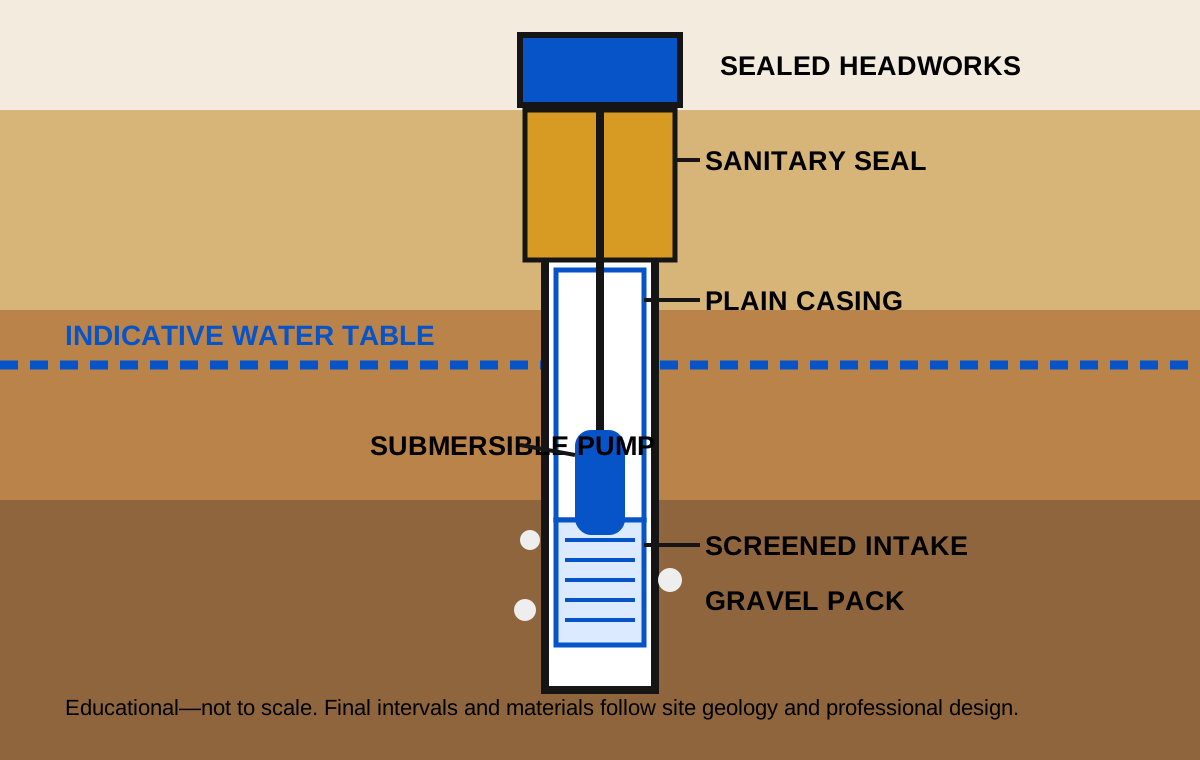
borehole camera inspection Kenya gives a technician visual information from inside an accessible borehole. Depending on water clarity, borehole diameter, installed equipment and camera capability, the inspection may help document visible casing condition, screen intervals, joints, obstructions, deposits, sediment accumulation or other features that are difficult to evaluate from the surface.
Video alone does not measure sustainable yield, water quality or pump duty. That is why it should be combined with the construction record and relevant performance evidence. Use the borehole maintenance checklist to assemble flow, water-level, control and service history before deciding what the camera needs to answer.
For borehole camera inspection Kenya, the best starting question is specific: Are we trying to locate an obstruction? Check visible casing condition? Review a suspected damaged interval? Understand sediment before rehabilitation? A defined question makes the inspection more useful.
Borehole camera inspection Kenya: step-by-step decision method
A professional borehole camera inspection Kenya workflow begins before the camera is lowered. Review the borehole construction, pump setting and access. If the pump or rising main prevents safe access, removal may need to be planned as a separate service activity. The inspection should not be improvised around installed equipment.
- Define the symptom. Record sand, declining flow, obstruction, unusual pump service findings or another concern.
- Review records. Collect drilling logs, casing/screen intervals, pumping tests and previous repairs.
- Confirm access. Identify installed pump, cable, rising main and headworks limitations.
- Set the inspection objective. Decide which visible condition the video is intended to confirm or rule out.
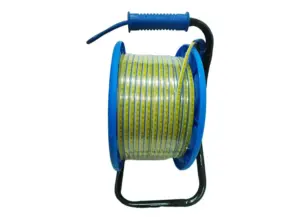
- Record depth reference. Video observations should be tied to a consistent depth reference where possible.
- Interpret with other evidence. Compare visual findings with flow, water levels, sediment and construction history.
- Plan the intervention. Use the combined evidence to decide whether cleaning, repair, rehabilitation or monitoring is justified.
- Keep the video and report. Future technicians should be able to compare later inspections with the baseline.
A useful way to locate an observation is simply:
In plain English, the recorded depth of a visible feature should be tied to a known reference point plus the measured camera deployment distance. Actual equipment may report depth differently, so the inspection record should state the method used.
How borehole camera inspection Kenya complements test pumping
borehole camera inspection Kenya can show visible construction or obstruction issues, while test pumping shows hydraulic behavior. These are complementary types of evidence. A borehole can look visually clear and still have reduced hydraulic performance, or it can show deposits while still producing acceptable flow.
The borehole test pumping Kenya guide explains how discharge, drawdown and recovery are measured. When a rehabilitation decision is being considered, combining hydraulic evidence with video findings can make the scope more defensible.
Choosing the right borehole camera inspection Kenya approach
The correct borehole camera inspection Kenya approach depends on the question, access and water clarity. A visual survey should not be sold as a universal diagnosis. It may be highly useful for some construction concerns and less useful when the main problem is electrical, downstream pressure, or water chemistry.
| Problem | Camera value | Other evidence needed |
|---|---|---|
| Suspected casing damage | Can help document visible condition and depth | Construction record and service history |
| Sand in pumped water | May show visible sediment or intake concerns | Pump setting, operating rate, screen/pack record |
| Reduced flow | May reveal visible deposits or obstruction | Flow, static/pumping water levels and pump condition |
| Lost tool or obstruction | Can help locate visible obstruction | Depth record and recovery plan |
| Low building pressure | Usually not the first diagnostic tool | Storage, booster, pressure controls and distribution checks |
When comparing performance before and after intervention, a simple flow ratio can be useful:
In plain English, the flow ratio R compares measured post-work flow with pre-work flow under comparable conditions. It does not replace water-level interpretation but helps verify whether an intervention changed delivered performance.
Worked example: borehole camera inspection Kenya before rehabilitation
Imagine a borehole that has produced increasing sediment and lower flow. The original construction record identifies screened intervals and pump setting. A service visit confirms that the pump and controls are functioning, while hydraulic measurements suggest a change from the previous baseline. A borehole camera inspection Kenya is then used to look for visible sediment accumulation, obstruction or construction concerns before a rehabilitation method is chosen.
The video shows a visible condition at a recorded depth. The contractor does not immediately claim that the image alone proves the cause. Instead, the observation is compared with the drilling log, screen interval, pump setting and sediment history. That combined evidence guides the next work.
This is a stronger use of borehole camera inspection Kenya than simply lowering a camera and handing the owner a video with no interpretation or action plan.
| Illustrative evidence source | Relative priority index |
|---|---|
| Construction records | 100 |
| Hydraulic measurements | 92 |
| Video observations | 84 |
| Post-work verification | 76 |
Features of our borehole camera inspection Kenya assessment
| Feature | What it supports |
|---|---|
| Pre-inspection record review | Defines expected casing, screen and pump intervals |
| Access assessment | Identifies whether installed equipment affects camera access |
| Inspection objective | Keeps the video focused on a defined question |
| Depth-referenced observations | Links visible features to the borehole record |
| Hydraulic comparison | Combines visual findings with actual source performance |
| Condition report | Records observations and limitations clearly |
| Next-step recommendation | Connects evidence to monitoring, repair or rehabilitation |
Advantages of evidence-led borehole camera inspection Kenya include:
- Better rehabilitation scoping because visible conditions can be tied to depth.
- Less guesswork when an obstruction or construction concern is suspected.
- Better handover evidence because video and notes can be stored with the borehole record.
- Stronger before-and-after comparison when a later inspection is completed.
- Clearer repair discussions because the owner can see the documented condition.
- Better fault separation because visual findings are combined with hydraulic and equipment checks.
Borehole camera inspection Kenya pricing
borehole camera inspection Kenya pricing depends on borehole depth, access, whether the pump must be removed, the inspection objective, recording/reporting scope and whether the visit is combined with performance testing or rehabilitation work. A quotation should state what is included rather than pricing “camera work” as an undefined service.
| Scope | Indicative price | What to confirm |
|---|---|---|
| Records and access review | $— | Construction documents and installed equipment |
| Camera inspection | $— | Depth range, recording, observations and limitations |
| Pump removal/reinstallation if required | $— | Depth, lifting scope, cable and rising main handling |
| Combined rehabilitation assessment | $— | Hydraulic checks, video interpretation and next-step plan |
Borehole camera inspection Kenya for sand problems
Sand can come from several causes, so borehole camera inspection Kenya should not be used to assume a gravel-pack or screen failure before other evidence is reviewed. Start with when the sand began, whether it appears continuously or only on startup, the pump setting, operating rate and original construction record.
Use the why a borehole pumps sand in Kenya guide to structure the diagnosis. A video inspection may then help document a visible condition that supports or rules out part of the hypothesis.
Borehole camera inspection Kenya for reduced flow
Reduced flow may come from pump wear, water-level change, pipe restriction, treatment equipment or a condition inside the borehole. A borehole camera inspection Kenya is most useful after surface equipment and hydraulic performance have been reviewed enough to justify looking inside the borehole.
If source performance has changed, compare static and pumping water levels with the historical baseline. The borehole water reducing over time guide explains why a declining supply should be diagnosed before rehabilitation is selected.
Borehole camera inspection Kenya before pump replacement
A routine pump replacement does not always require borehole camera inspection Kenya. If the source is performing normally and the failure is clearly equipment-related, the replacement may proceed from the existing records and pump-duty assessment. Camera work becomes more valuable when removal exposes unexpected sediment, obstruction or construction concerns.
Keep the pump model, setting depth and any observations made during removal. Those records can help the camera operator interpret what is visible at the corresponding depths.
Borehole camera inspection Kenya after rehabilitation
Where a pre-work video identified a visible condition, a post-work borehole camera inspection Kenya can provide a visual comparison. However, rehabilitation success should also be checked with the performance measurement that justified the work. If reduced flow was the problem, repeat comparable flow and water-level checks.
The borehole rehabilitation Kenya guide emphasizes diagnosis and post-work verification. Video is one evidence layer within that process.
What a borehole camera inspection Kenya cannot prove alone
- It cannot establish sustainable yield without hydraulic testing.
- It cannot prove water safety or chemistry without appropriate testing.
- It cannot diagnose an electrical pump fault from video alone.
- It cannot guarantee that every defect is visible in poor water clarity.
- It cannot replace accurate construction records.
- It cannot show conditions outside the visible borehole wall or casing.
- It cannot replace post-repair performance verification.
Understanding these limits helps set realistic expectations for borehole camera inspection Kenya and prevents a video from being treated as a complete diagnosis.
Records to keep after borehole camera inspection Kenya
- Inspection date and borehole identification.
- Reference point and depth-record method.
- Camera system and access limitations.
- Observed casing, screen, sediment or obstruction features.
- Depth of significant observations.
- Relevant pump setting and construction intervals.
- Hydraulic or water-quality evidence reviewed with the video.
- Recommended next step and reason.
- Original video and summarized inspection report.
Common borehole camera inspection Kenya mistakes
- Ordering video before defining the problem.
- Ignoring construction records that already answer key questions.
- Treating poor image clarity as proof that nothing is wrong.
- Reporting visible features without depth references.
- Assuming deposits automatically justify chemical treatment.
- Using video instead of hydraulic testing for a yield complaint.
- Failing to record pump setting before equipment removal.
- Completing rehabilitation without measuring whether performance improved.
How to get started with borehole camera inspection Kenya
Gather the drilling log, casing/screen details, pump information, pumping-test report and recent service history. Describe the problem and the decision the inspection needs to support. If pump removal is likely, include that scope in the service plan instead of treating it as an unexpected extra.
A useful borehole camera inspection Kenya visit should leave you with a saved video, depth-referenced observations, known limitations and a next-step recommendation that is connected to the rest of the borehole evidence.
Borehole camera inspection Kenya FAQs
What can a borehole camera inspection show?
It can help document visible casing, screen, joints, deposits, sediment, obstructions or other accessible internal conditions, depending on water clarity and access.
Do I need to remove the pump first?
That depends on the borehole configuration and the inspection route. Installed pump equipment can limit access and should not be worked around unsafely.
Can a camera tell me the borehole yield?
No. Yield and hydraulic performance require pumping and water-level measurements.
Can camera inspection diagnose sand?
It can add visual evidence, but sand diagnosis also needs construction records, pump setting, operating rate and performance information.
Is camera inspection needed before every rehabilitation?
No. Use it when visual evidence is likely to answer a defined condition or construction question.
Should video be repeated after rehabilitation?
It can be useful when a visible pre-work condition needs comparison, but performance should also be verified with the relevant hydraulic measurements.
What should the report include?
Keep the video, depth references, observations, limitations, records reviewed and the recommended next step.
Use borehole camera inspection Kenya to answer a defined question
borehole camera inspection Kenya is most valuable when it is tied to a clear diagnostic objective and interpreted with construction, pumping and maintenance records. Plan safe access, record observation depths, understand the limits of the video, and verify any corrective work with the measurement that mattered before the inspection.
Borehole camera inspection Kenya and depth referencing
A borehole camera inspection Kenya report becomes much more useful when visible observations are tied to depth. The inspector should state the measurement reference and note any limitation caused by cable stretch, headworks geometry or equipment configuration. A statement such as “deposit seen near the screen” is less useful than a depth-referenced observation that can be compared with the original construction log.
Depth referencing is especially important if the borehole has several screened or cased intervals. When the video is reviewed later, the owner and technician can see whether a visible feature corresponds with a known construction change. This makes borehole camera inspection Kenya more useful for future rehabilitation planning and reduces reliance on memory.
Borehole camera inspection Kenya when records are missing
Older boreholes sometimes have incomplete drilling or construction records. In that situation, borehole camera inspection Kenya can help create part of a new condition baseline, but it should not be presented as a perfect reconstruction of the original build. Visible casing joints, apparent screen intervals and sediment can be documented, while uncertain observations should be labeled as uncertain.
Combine the video with measured total accessible depth, pump setting, water levels, flow and any old invoices or service notes that can be verified. The aim is to build the strongest possible working record for future decisions, not to invent missing construction details.
Borehole camera inspection Kenya and water clarity
Water clarity can limit what a camera sees. Suspended sediment, disturbed deposits or poor lighting can obscure casing or screen surfaces. If the image is unclear, the report should state that limitation rather than treating a lack of visible detail as proof that no problem exists. A second inspection condition may sometimes be more informative after the borehole has settled, but the decision should follow the service objective.
This limitation is one reason borehole camera inspection Kenya should be interpreted with hydraulic measurements and construction records. Video is a visual evidence source, not a substitute for every other test.
Borehole camera inspection Kenya handover checklist
- Save the complete inspection video, not only selected screenshots.
- Record the reference point and depth method.
- List pump or equipment removed before inspection.
- Identify visible observations and their approximate depths.
- State water-clarity or access limitations.
- Attach the drilling and construction records reviewed.
- Record the hydraulic measurements used in interpretation.
- Write the recommended next step and why it follows from the evidence.
A complete handover keeps borehole camera inspection Kenya useful years later. If the borehole is inspected again, the new video can be compared with a known baseline instead of being interpreted in isolation.