
borehole drilling contract Kenya planning should turn a quotation into a clear agreement about scope, measurement, variations, testing, payment, handover and owner responsibilities. This guide gives homeowners, farms, institutions, developers and businesses a practical project checklist for commercial clarity without pretending to replace legal advice.

Why borehole drilling contract Kenya clarity matters
A borehole drilling contract Kenya should recognize that groundwater projects contain unknown conditions and provisional quantities. Depth, drilling method, permanent construction, development, test pumping and equipping may depend on evidence that becomes clearer as the project progresses. The agreement therefore needs a transparent method for handling change instead of pretending every quantity is fixed before work begins.
Commercial disputes often start when two parties use the same words to mean different things. “Complete borehole,” “per metre,” “pump installation” and “testing” can each hide exclusions. A useful contract defines what is included, how quantities are measured and what documents will prove that a stage is complete.
Before selecting a contractor, use how to compare borehole drilling companies in Kenya to normalize quotations. The contract should then reflect the scope you actually selected rather than a shorter verbal understanding.
Commercial tip: if a line can change the final account, define the measurement and approval method before mobilization.
borehole drilling contract Kenya: step-by-step checklist
A practical borehole drilling contract Kenya can be built in stages. The goal is to connect every commercial line with a technical deliverable and a record.
- Write the project brief. Identify the site, intended use, available reports, access constraints and the desired complete-system outcome.
- Define the scope by stage. Separate planning, mobilization, drilling, construction, development, testing, equipping, storage, distribution and handover.
- Define measurement rules. State how drilled depth and installed quantities will be recorded and verified.
- List assumptions and exclusions. Mark owner-supplied items, provisional quantities and work that is outside the contract.
- Create a variation process. Require a description, reason, quantity or scope change, price basis and approval record.
- Link payments to deliverables. Make milestones understandable and measurable rather than vague percentages of progress.
- Define testing and acceptance. State what records are expected before each critical stage is accepted.
- Define handover. List the reports, equipment information, settings, warranties and maintenance guidance to be supplied.
A simple scope formula makes borehole drilling contract Kenya completeness easier to review:
In plain English, the complete project price is the sum of the agreed stages. The formula is a scope-checking tool, not a substitute for the itemized quotation.
How to review borehole drilling contract Kenya before signing
Read the borehole drilling contract Kenya against the quotation and project brief line by line. Confirm that the site, parties, deliverables, measurement basis, payment milestones, variation process, exclusions and handover records are consistent across all documents.
Where technical terms are important, define them in practical language. For example, distinguish drilled depth from pump installation depth, and distinguish a pumping test from a short operational check. Clear definitions reduce the chance that a later disagreement is really a terminology problem.
Choosing the right structure for borehole drilling contract Kenya
The right borehole drilling contract Kenya structure depends on the procurement method and how much is known before drilling. Some lines may be fixed, while others are provisional or remeasured. The agreement should make that distinction visible.
| Contract item | What to define | Avoid this mistake |
|---|---|---|
| Fixed-price work | Exact included deliverable and exclusions | Calling uncertain quantities fixed without a change rule |
| Remeasured work | Unit, rate and verification record | Using a rate without defining what it includes |
| Provisional item | Allowance, trigger and approval method | Treating an allowance as a guaranteed final amount |
| Owner-supplied item | Specification, timing and responsibility | Leaving coordination and warranty responsibility unclear |
| Variation | Reason, scope, quantity, price basis and approval | Relying on verbal instructions only |
A second formula helps connect pump-related contract scope to the actual delivery duty:
In plain English, total pump head combines lift, elevation, friction and required delivery pressure. A borehole drilling contract Kenya that includes final pump selection should state that equipment will be matched to measured source performance and the agreed delivery duty. See borehole pump sizing in Kenya.
Define the project brief before the contract
A strong borehole drilling contract Kenya begins with the client’s brief. State the site location, intended water use, known reports, proposed delivery points, access limitations, power preference, storage objectives and any future expansion that may affect the design.
Unknowns should remain visible. If the final depth, construction quantities or pump duty cannot be confirmed yet, label them as provisional or subject to measured evidence. Hiding uncertainty does not remove it; it simply moves the disagreement to a later stage.
Use what you need before drilling a borehole in Kenya as a pre-contract preparation checklist.
Scope should separate drilling from construction
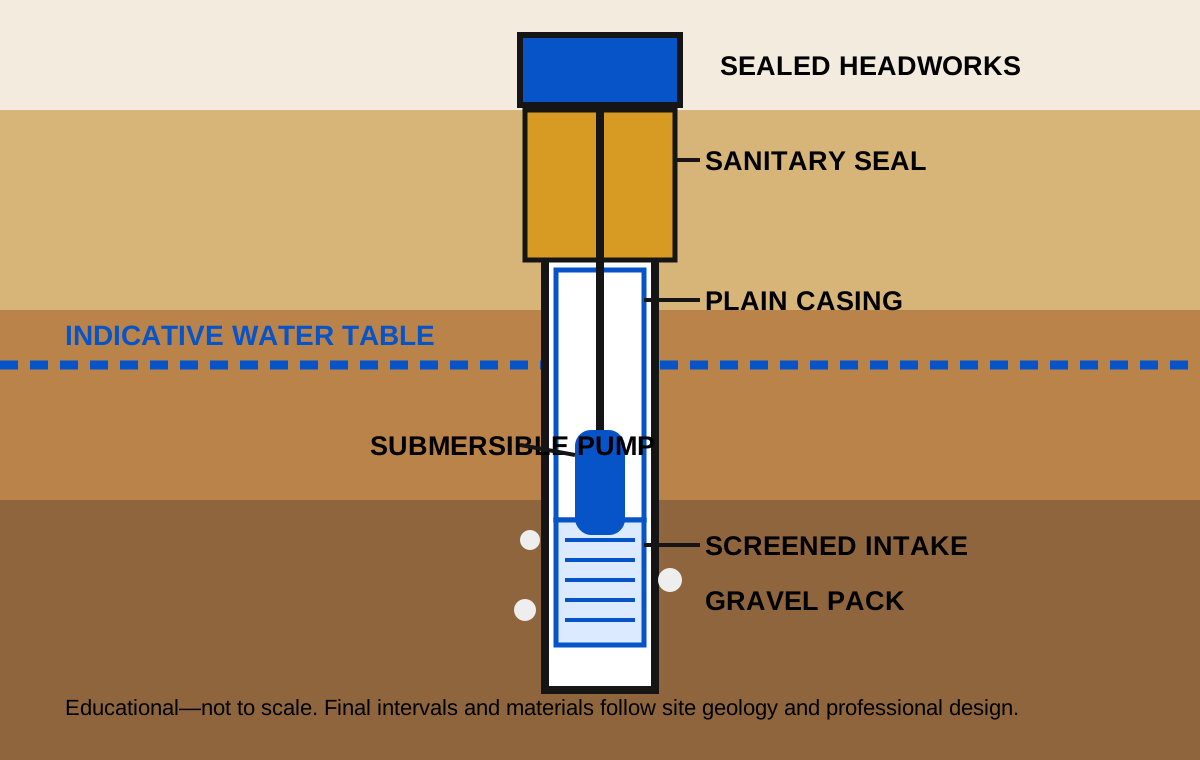
A borehole drilling contract Kenya should not treat “drilling” as a single line if permanent construction is commercially important. Identify drilling method, working diameter, depth measurement, casing, screen, gravel pack, seals, development and headworks where applicable.
For construction choices, see borehole casing in Kenya and borehole headworks in Kenya. The contract should state which installed quantities are remeasured and which records will be provided at completion.
If the method changes because actual ground conditions differ from the basis of the quotation, the variation clause should explain how the technical reason, commercial effect and approval are documented.
Mobilization, access and site responsibilities
Many borehole drilling contract Kenya disputes are avoidable when site responsibilities are written down. Clarify access for rig and support vehicles, working space, site preparation, temporary water or power, security, spoil handling, working hours and reinstatement where relevant.
State who is responsible if access differs materially from the information provided before quotation. If standby charges are possible, define when they apply and how time is recorded. This encourages both parties to resolve site constraints before expensive equipment is mobilized.
Safety responsibility should also be allocated clearly. The contract should not encourage unqualified persons to enter controlled work areas, handle electrical systems or interfere with drilling equipment.
Measurement rules protect both parties
A good borehole drilling contract Kenya explains how measured work becomes an invoice. For depth-related work, state the unit and the record used. For casing or pipework, state whether measurement is based on installed length, supplied length or another agreed basis. For lump-sum stages, define the deliverable that marks completion.
Measurement records should be available to both parties. This does not require a complicated system. A signed daily or stage record showing depth, installed materials and key changes can prevent a later argument about what happened on site.
If a quantity is provisional, the final account should reconcile the allowance with the measured result under the agreed rate or pricing method.
Variations need a written process
Variation control is central to borehole drilling contract Kenya because actual field evidence can change the scope. A variation process should identify what changed, why it changed, how the quantity or scope was determined, the price basis and who approved it.
Where practicable, agree the commercial effect before changed work proceeds. If urgent technical circumstances make that impossible, record the instruction and pricing basis as soon as possible. Avoid relying on informal messages that do not explain the quantity, rate or acceptance criteria.
A variation log can remain simple: reference number, date, description, reason, amount or rate basis, approval status and effect on completion. That record makes the final account easier to reconcile.
Test pumping, water testing and acceptance
A borehole drilling contract Kenya should keep testing visible. Test pumping creates evidence for source performance and final pump selection. Water-quality testing addresses a separate question about the intended use. Do not treat one as a substitute for the other.
Review borehole test pumping Kenya and borehole water testing and treatment in Kenya. The contract should state what reports or results are expected and who receives them.
Acceptance criteria should match the stage. Drilling completion, construction completion, pumping-test completion, pump commissioning and complete water-system handover may each require different records.
Payment milestones should follow measurable work
Payment terms in a borehole drilling contract Kenya should be understandable and linked to visible deliverables. Avoid milestones described only as “progress” if neither party can objectively determine when the milestone has been achieved.
Examples of measurable stages include mobilization completed, agreed drilling stage recorded, permanent construction completed, testing report delivered, pump and controls commissioned, or final handover documents supplied. The exact payment structure is a commercial and legal decision for the parties.
Keep tax, withholding, retention, warranty or security requirements clear where they apply to the specific procurement. Obtain appropriate professional advice for legal or tax terms beyond the technical project checklist in this article.
Common borehole drilling contract Kenya mistakes
Several borehole drilling contract Kenya mistakes repeatedly create avoidable uncertainty.
- Signing a one-page quotation only. Important measurement and variation rules may be missing.
- Using a per-metre rate with no inclusions. Drilling, casing and testing can be interpreted differently.
- Vague payment milestones. Neither party knows what evidence triggers payment.
- Verbal variations. Changed work becomes difficult to price and reconcile later.
- Undefined testing. Pumping-test and water-quality deliverables are assumed rather than written.
- Weak handover. The owner receives a working system but no baseline records.
Worked example for borehole drilling contract Kenya
Consider three illustrative agreements. The first contains only a headline drilling rate. The second adds itemized scope and measurement. The third also defines variations, testing, acceptance, payment milestones and handover. The chart is illustrative data only and does not score any real contract.
| Illustrative agreement | Contract-completeness index |
|---|---|
| Headline rate | 32 |
| Itemized scope | 67 |
| Scope + controls + handover | 100 |
The borehole drilling contract Kenya lesson is that commercial clarity comes from defining how uncertain work is measured and controlled, not from pretending uncertainty does not exist.
Features of our borehole drilling contract Kenya scope process
| Feature | What it gives the project |
|---|---|
| Common project brief | A consistent basis for contractor quotations |
| Stage-by-stage scope | Visible planning, drilling, construction, testing and equipping tasks |
| Measurement schedule | Clear rules for remeasured quantities |
| Variation log | Written control of changed work and commercial effect |
| Acceptance checklist | Evidence required before critical stages are treated as complete |
| Handover schedule | Reports, settings, warranties and maintenance information |
Advantages of a structured borehole drilling contract Kenya process include:
- Comparable bids because the same project brief is used.
- Clear exclusions because responsibilities are written down.
- Controlled changes through a defined variation process.
- Measurable payments linked to deliverables.
- Useful handover records for operation, warranty and future maintenance.
borehole drilling contract Kenya pricing schedule
The borehole drilling contract Kenya should not invent prices before the project scope is verified. Where no site-specific or verified price exists, the schedule below uses $— and focuses on what must be defined.
| Contract line | Indicative price | Confirm before signing |
|---|---|---|
| Assessment / planning | $— | Deliverables, reports and application support |
| Mobilization | $— | Access, standby and site responsibilities |
| Drilling | $— | Method, diameter, unit rate and depth measurement |
| Permanent construction | $— | Casing, screen, gravel pack, seals and headworks |
| Development and testing | $— | Development, pumping test and reporting |
| Equipping | $— | Pump, controls, installation and commissioning |
| Storage / distribution | $— | Tanks, pipe routes, pressure and delivery points |
| Handover | $— | Records, warranties and operating guidance |
Handover records should be listed before work starts
A borehole drilling contract Kenya should say what the owner receives at completion. Useful records can include the drilling log, construction record, pumping-test report, water-quality result, pump model, installation depth, controller settings, storage information, warranties and maintenance guidance.
Handover is easier when the list is agreed before mobilization. If a document is expected only at the end but was never included in the contractor’s scope, recovering it later can be difficult.
Use borehole maintenance in Kenya to turn the handover baseline into a service plan after commissioning.

How to get started with borehole drilling contract Kenya
Prepare the site pin, intended use, access information, existing reports, preferred project scope and any owner-supplied items. Issue the same brief to bidders and ask them to separate the stages in this guide.
Before signing the borehole drilling contract Kenya, normalize the selected quotation, resolve obvious exclusions, define the measurement and variation rules, and list the records required at each acceptance stage. Obtain appropriate legal advice for the agreement terms and the circumstances of your project.
borehole drilling contract Kenya FAQs
What should a borehole drilling contract Kenya include?
It should define the parties, site, scope, measurement basis, assumptions, exclusions, variation process, payment milestones, testing, handover, responsibilities and relevant warranty information.
Should a per-metre drilling rate be written into the contract?
If a per-metre rate is used, the agreement should also state what the rate includes, how depth is measured, what happens if the drilling method changes and which construction items are separate.
How should variations be handled?
Use a written process that records the reason, changed quantity or scope, price basis and approval before the work is treated as an agreed variation where practicable.
When should final payment be made?
The payment structure should be agreed in advance and linked to measurable deliverables, including the required testing and handover records.
Does this checklist replace a lawyer?
No. It is a project-scope and commercial-clarity checklist. Obtain appropriate legal advice for the contract terms and your specific circumstances.
Which handover records matter?
Keep drilling and construction records, pumping-test results, water-quality results, pump and controller information, commissioning settings, warranties and maintenance guidance.
Make borehole drilling contract Kenya a measurable project agreement
borehole drilling contract Kenya works best when scope, uncertainty, measurement, variations, payments, testing and handover are all visible before work begins. A transparent agreement does not remove geological uncertainty, but it gives both parties a method for managing it.
The objective is a contract that reflects the technical project, supports fair measurement and leaves the owner with the records needed to operate and maintain the completed water system.
Close-out, defects and post-handover responsibilities
Project close-out should be treated as a defined stage rather than the moment the drilling rig or installation team leaves site. Before the final account is agreed, compare the delivered work with the scope schedule, measurement records, approved variations, testing requirements and handover list. Record any incomplete document, adjustment or corrective item in a short close-out schedule with an owner, target date and verification method.
If the parties agree a defects or follow-up arrangement, state what it covers, how a problem is reported, what evidence should be provided and which exclusions apply. Equipment warranties should identify the actual manufacturer or supplier documentation and should not be confused with a broader promise about the groundwater source. Keep serial numbers, model information, installation settings and commissioning records with the project file so a later service request can be traced to the installed equipment.
The owner should also understand ongoing responsibilities after handover. Routine monitoring, timely maintenance, protection of the wellhead, proper operation of controls and retention of water-quality records can affect the condition of the system long after construction. The contractor should not be expected to carry responsibility for later changes made by unrelated parties unless the agreement specifically says so.
A final project review is useful even when no dispute exists. Compare the original assumptions with the final measured depth, installed construction, test results, pump duty, storage and distribution scope. That record helps the owner budget future service and gives any new technician a reliable starting point. It also creates a clearer reference if the site is expanded or the water system is modified later.