
borehole drilling environmental management Kenya planning helps prevent a water project from creating avoidable site, drainage, waste, safety or reinstatement problems while the rig is working. This guide shows property owners, contractors, developers, farms and institutions how to structure environmental controls around access, drilling returns, water, fuel, noise, dust, housekeeping and final site restoration.

Why borehole drilling environmental management Kenya matters
borehole drilling environmental management Kenya is part of delivering a well-organized project, not an activity added after drilling starts. A rig needs access and working space, drilling produces cuttings and return water, support equipment uses fuels and lubricants, and the site may sit near buildings, roads, farms, drainage paths or public areas. Each interface should have an agreed control.
The objective is practical: define what the contractor will protect, where work materials and returns will be managed, how incidents are reported and what the site should look like at handover. The plan should match the actual location rather than copy a generic checklist from another project.
Start with what you need before drilling a borehole in Kenya so access, intended water use and project information are clear before mobilisation.
Site-management tip: the cheapest environmental problem to fix is usually the one prevented by a clear work-zone and drainage plan before heavy equipment arrives.
borehole drilling environmental management Kenya: step-by-step method
A practical borehole drilling environmental management Kenya plan should follow the project from pre-mobilisation through final reinstatement. Owners do not need to direct specialist drilling operations; instead, they should agree the environmental outcomes, responsibilities and records with the competent contractor.
- Describe the site. Record access, slope, drainage direction, nearby structures, occupied areas, vegetation, services information and sensitive uses.
- Define the work zone. Identify where the rig, support vehicles, materials and temporary work areas will be located.
- Plan drilling returns. The contractor should define how cuttings, return water and any drilling-related materials will be contained, managed and removed or reused appropriately.
- Protect drainage. Keep uncontrolled runoff from carrying sediment or site materials away from the work area.
- Control fuel and maintenance activities. Use contractor procedures for safe storage, refuelling, leak response and waste handling.
- Manage dust, noise and traffic. Match controls to neighbours, working hours, access roads and occupied buildings.
- Protect the completed wellhead. Keep the final headworks area clean, secure and appropriately drained.
- Record incidents and corrective actions. Keep a simple project log so issues are closed rather than forgotten.
- Reinstate and hand over. Remove temporary materials, restore agreed areas and document the final condition.
A simple area-volume relationship can help professional teams estimate a temporary containment or storage requirement from an approved design:
In plain English, volume V equals area A multiplied by average depth d. This is a planning relationship only; the contractor should select and design any containment based on the actual site and work method.
How to review borehole drilling environmental management Kenya before mobilisation
Review the borehole drilling environmental management Kenya plan with the project scope before the rig is dispatched. Check that responsibilities for access preparation, work-zone control, drilling returns, fuel handling, waste removal, sanitation, reinstatement and incident reporting are assigned to named parties or clear roles.
Also identify owner responsibilities. If the owner must provide access, a laydown area, security or a temporary water source, those assumptions should be confirmed before mobilisation. This prevents environmental controls from failing because the site arrangement was never agreed.
Choosing the right borehole drilling environmental management Kenya controls
The right borehole drilling environmental management Kenya controls depend on the site. A rural farm, a school compound, a dense residential property and a construction site have different traffic, noise, drainage and public-access risks even when the drilling process is similar.
| Site issue | Planning question | Control objective |
|---|---|---|
| Access | Can the rig and support vehicles reach the work area safely? | Reduce unnecessary ground disturbance and traffic conflict |
| Drainage | Where will rainfall and work water flow? | Prevent uncontrolled sediment movement |
| Drilling returns | How will cuttings and return water be managed? | Keep materials within the controlled work system |
| Fuel / maintenance | Where will contractor support activities occur? | Prevent leaks and keep response materials available |
| Neighbours / occupants | Who may be affected by noise, dust or vehicle movement? | Coordinate timing, access and communication |
| Close-out | What should the site look like after work? | Remove temporary impacts and preserve the wellhead |
A second formula can support transparent waste and material accounting:
In plain English, the documented project total can be reconciled across material reused appropriately, recovered for another purpose or removed through the agreed route. The categories and records should match the actual site plan and contractor procedures.
Access planning comes before the rig
borehole drilling environmental management Kenya begins with getting heavy equipment to the correct point without unnecessary disturbance. Confirm the access route, gate width, overhead constraints, soft ground, slopes, turning space and locations that should not be trafficked.
Where the site contains gardens, crops, paved areas or occupied facilities, agree the route before mobilisation. Photograph the starting condition where useful so reinstatement expectations are clear. If access changes after quotation, document the change before the rig enters the site.
Use good water starts with a good plan for the broader project sequence from planning through delivery.
Drilling returns, cuttings and work water need a plan
A central part of borehole drilling environmental management Kenya is controlling materials produced during drilling. The contractor should decide how cuttings and return water will be handled for the selected drilling method and actual site. The plan should keep these materials away from uncontrolled drainage paths, occupied spaces and sensitive property areas.
This article does not prescribe a one-size-fits-all pit, chemical recipe or disposal method. Appropriate controls depend on the drilling method, geology, site layout and current project requirements. The contractor should explain the selected arrangement and how the area will be reinstated.
At handover, temporary work areas should be cleared according to the agreed scope. If any material is intentionally retained or reused on site, record the approved purpose and final location.
Drainage and erosion control around the work area
borehole drilling environmental management Kenya should identify where rainwater and work water will move across the site. A clean work area can still create a problem if runoff carries sediment toward buildings, roads, drains, streams or neighbouring land.
Plan the rig area and temporary material zones with the site’s slope in mind. Keep clean stormwater separated from disturbed areas where practical, and do not create an uncontrolled route that concentrates runoff onto adjacent property. Where erosion appears during the work, address it promptly instead of waiting for final reinstatement.
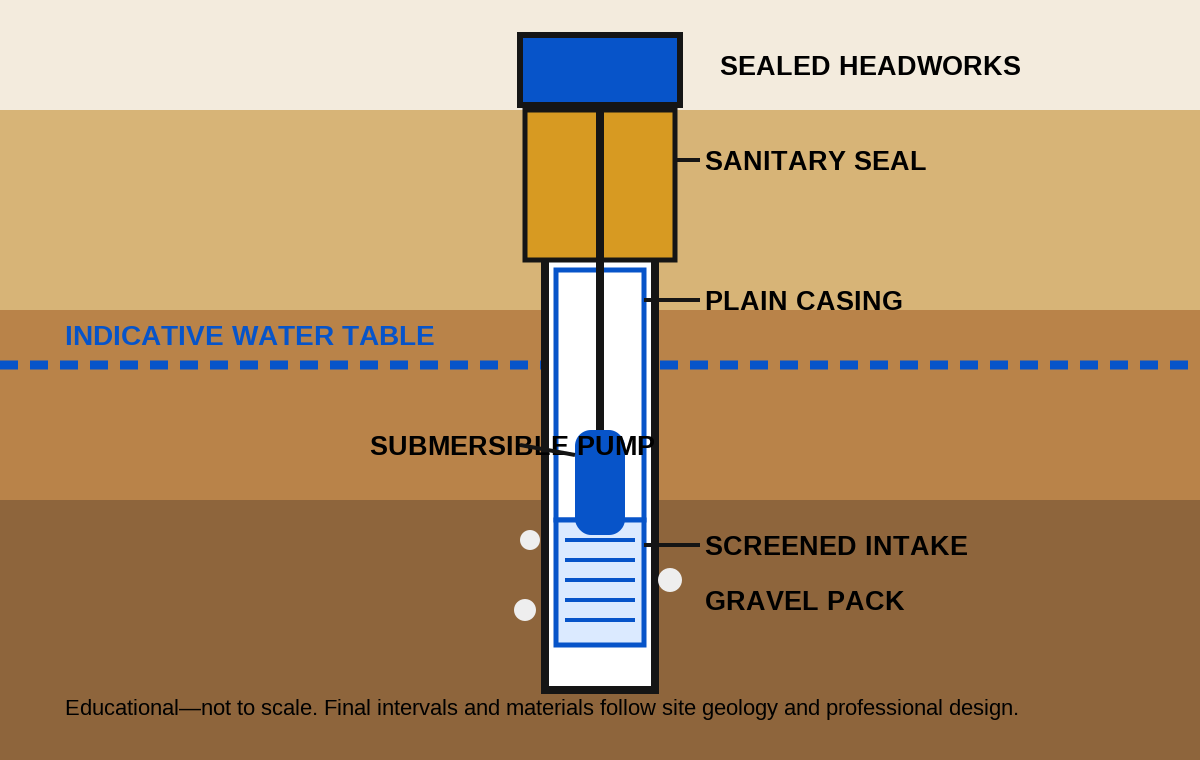
Final headworks also need positive site management. See borehole headworks in Kenya for the importance of keeping the completed wellhead secure and protected from ponded surface water.
Fuel, oils and contractor support activities
Support equipment is part of borehole drilling environmental management Kenya. The contractor should have procedures for fuel storage, refuelling, equipment maintenance, leak response and waste materials. Owners should ask where these activities will occur and how the work area will be kept orderly.
Do not handle unknown spills or hazardous materials yourself. Keep people away from the affected area and follow the contractor’s incident procedure, with specialist or emergency support where needed. The project record should describe significant incidents and corrective actions.
A tidy support zone also improves safety because hoses, containers, tools and waste are less likely to obstruct access or mix with clean materials.
Dust, noise, traffic and occupied sites
borehole drilling environmental management Kenya also covers the way drilling affects people around the site. Schools, apartments, hospitals, offices and residential compounds may need access coordination, working-hour planning and clear separation between the work zone and normal movement.
Discuss likely noisy periods and vehicle movements before work begins. Keep public access away from the rig and support equipment. Where dust becomes a site issue, use contractor controls appropriate to the road surface and work activity without creating uncontrolled runoff.
Communication matters. A short notice to facility managers, security teams or neighbouring occupants can prevent vehicles being blocked, people entering controlled areas or routine operations conflicting with drilling activity.
Water quality, sanitary protection and the completed source
The environmental plan should continue after drilling. borehole drilling environmental management Kenya close-out should leave the completed source with secure headworks, sensible drainage and clear separation from temporary work materials.
Water quality should be assessed through appropriate testing rather than appearance alone. Use borehole water testing and treatment in Kenya for the site’s decision framework. Keep sampling records and laboratory reports with the handover file.
If treatment is later installed, separate raw-water evidence from treated-water results so the owner can understand whether a change comes from the source or the treatment process.

Permits, approvals and current project requirements
borehole drilling environmental management Kenya should be coordinated with the approvals and conditions that apply to the actual project. Requirements can change and can depend on the proposed source and site, so project teams should verify current obligations rather than relying on an old checklist from another borehole.
Use WRA borehole permit process in Kenya for the site’s broader authorization-planning context. Keep permits, conditions, technical reports and relevant correspondence with the project file so the environmental plan can reflect the approved work.
If a condition affects site access, monitoring, reporting or completion, include it in the contractor’s work plan and close-out checklist.
Worked example: environmental planning completeness
Consider three illustrative project approaches. The first focuses only on getting the rig to the site. The second adds drilling-return and drainage controls. The third also covers support activities, public interfaces, incident records and reinstatement. These values are illustrative data only and do not score a real contractor.
| Illustrative management approach | Completeness index |
|---|---|
| Rig access only | 30 |
| Access + returns + drainage | 66 |
| Full site controls + close-out | 100 |
The borehole drilling environmental management Kenya lesson is that good close-out starts before drilling. When responsibilities are defined early, temporary impacts are easier to control and verify.
Features of our borehole drilling environmental management Kenya review
| Feature | What it helps establish |
|---|---|
| Site-context review | Access, drainage, occupied areas and work-zone constraints |
| Drilling-return plan review | How temporary materials and water are controlled |
| Support-activity review | Fuel, maintenance, housekeeping and incident arrangements |
| Public-interface review | Traffic, noise, dust and access around occupied sites |
| Wellhead close-out review | Final protection, drainage and clean work area |
| Reinstatement checklist | What temporary impacts are removed or restored |
| Project record | Incidents, corrective actions and handover evidence |
Advantages of structured borehole drilling environmental management Kenya include:
- Cleaner mobilisation because access and work areas are agreed before the rig arrives.
- Better drainage control because runoff paths are considered early.
- Clearer contractor responsibility for support activities and temporary materials.
- Better neighbour coordination around noise, traffic and occupied sites.
- Stronger handover because reinstatement and records are visible deliverables.
- Better source protection because final headworks and water-quality records are part of close-out.
borehole drilling environmental management Kenya pricing
borehole drilling environmental management Kenya pricing depends on site access, project scale, required controls, drilling method, work-area constraints, reinstatement scope and any specialist monitoring or reporting. Because no verified universal price applies to every site, the table uses $— until the actual project scope is assessed.
| Scope | Indicative price | Confirm in quotation |
|---|---|---|
| Pre-mobilisation site review | $— | Access, drainage, work zones and responsibilities |
| Temporary environmental controls | $— | Drilling returns, work-water and housekeeping scope |
| Occupied-site coordination | $— | Traffic, access, noise and communication measures |
| Incident / corrective-action support | $— | Reporting and specialist response if required |
| Reinstatement and close-out | $— | Temporary-work removal, final condition and records |
Environmental records to keep during drilling
A useful borehole drilling environmental management Kenya file does not need to be complicated. Keep the approved site layout or work-area sketch, relevant permits or conditions, pre-work photographs where useful, contractor control plan, incident notes, corrective actions and final reinstatement record.
If drilling conditions change the temporary work arrangement, record the revised control rather than leaving the original plan untouched. For example, a different return-water route or changed access point should be understood by both the site owner and contractor.
At completion, combine those records with the drilling and construction documentation so the owner has one project history rather than separate technical and environmental files that cannot be reconciled.
Reinstatement and project handover
Reinstatement is the final test of borehole drilling environmental management Kenya. The contractor and owner should walk the site against the agreed scope: temporary materials removed, access damage addressed where included, work-water areas made safe, unused materials cleared and the completed headworks protected.
Record any outstanding item with a responsible party and verification method. Do not close the project merely because the rig has demobilised. A final photograph set and short handover note can provide a useful reference for future property management.
The wellhead area should then enter the site’s maintenance routine. Use borehole maintenance in Kenya to continue monitoring headworks condition, drainage, pump performance and water quality.
Common borehole drilling environmental management Kenya mistakes
- Waiting until the rig arrives before deciding the access route and work zone.
- Allowing drilling returns or disturbed soil to enter uncontrolled drainage paths.
- Leaving fuel, maintenance and waste responsibilities undefined.
- Failing to coordinate noisy or high-traffic work with occupied properties.
- Treating water appearance as a substitute for water-quality testing.
- Assuming an old permit or checklist automatically describes current project requirements.
- Demobilising without an agreed reinstatement inspection.
- Keeping environmental incidents separate from the final project record.
How to get started with borehole drilling environmental management Kenya
Before mobilisation, prepare the site location, access route, intended drilling point, nearby buildings and land uses, drainage direction, available services information and the expected final water-system layout. Share those details with the contractor during planning.
Ask for a concise borehole drilling environmental management Kenya plan that covers the work zone, drilling returns, support activities, public interfaces, incident response and reinstatement. Verify current project requirements and make the responsible parties visible.
During work, keep the plan practical. Record changes and correct issues promptly. At close-out, inspect the site and preserve the environmental record with the borehole construction and commissioning documents.
borehole drilling environmental management Kenya FAQs
What is borehole drilling environmental management Kenya?
It is the project planning and control used to manage access, drilling returns, drainage, support activities, noise, dust, public interfaces, wellhead protection and reinstatement around borehole work.
Who should prepare the environmental controls?
The controls should be coordinated by the competent project and drilling team, with owner responsibilities and any current approval conditions clearly identified.
How should drilling cuttings and return water be managed?
The contractor should use a site- and method-specific plan that keeps temporary materials controlled and prevents uncontrolled movement into drainage or occupied areas.
Does environmental management include fuel and oil?
Yes. Contractor support activities should include appropriate storage, refuelling, leak response, housekeeping and waste-handling procedures.
What should happen after drilling?
Temporary materials and work areas should be cleared or reinstated according to scope, the wellhead should be protected and close-out records should be handed to the owner.
Should water quality be part of close-out?
Where water testing is part of the project, keep the laboratory report and sampling information with the handover file rather than judging quality by appearance alone.
How much does borehole drilling environmental management Kenya cost?
Cost depends on site conditions, controls, project scale, reinstatement and reporting. Obtain a site-specific quotation rather than relying on a universal figure.
Make borehole drilling environmental management Kenya part of delivery
borehole drilling environmental management Kenya is most effective when it is integrated with technical planning, mobilisation, drilling, completion and handover. A clear work zone, controlled temporary materials, good drainage thinking and documented reinstatement can prevent small site issues from becoming expensive project problems.
The goal of borehole drilling environmental management Kenya is a completed water source and a site that is left controlled, understandable and ready for future operation. Keep the environmental record with the technical borehole file so later owners and service teams can see the full project history.