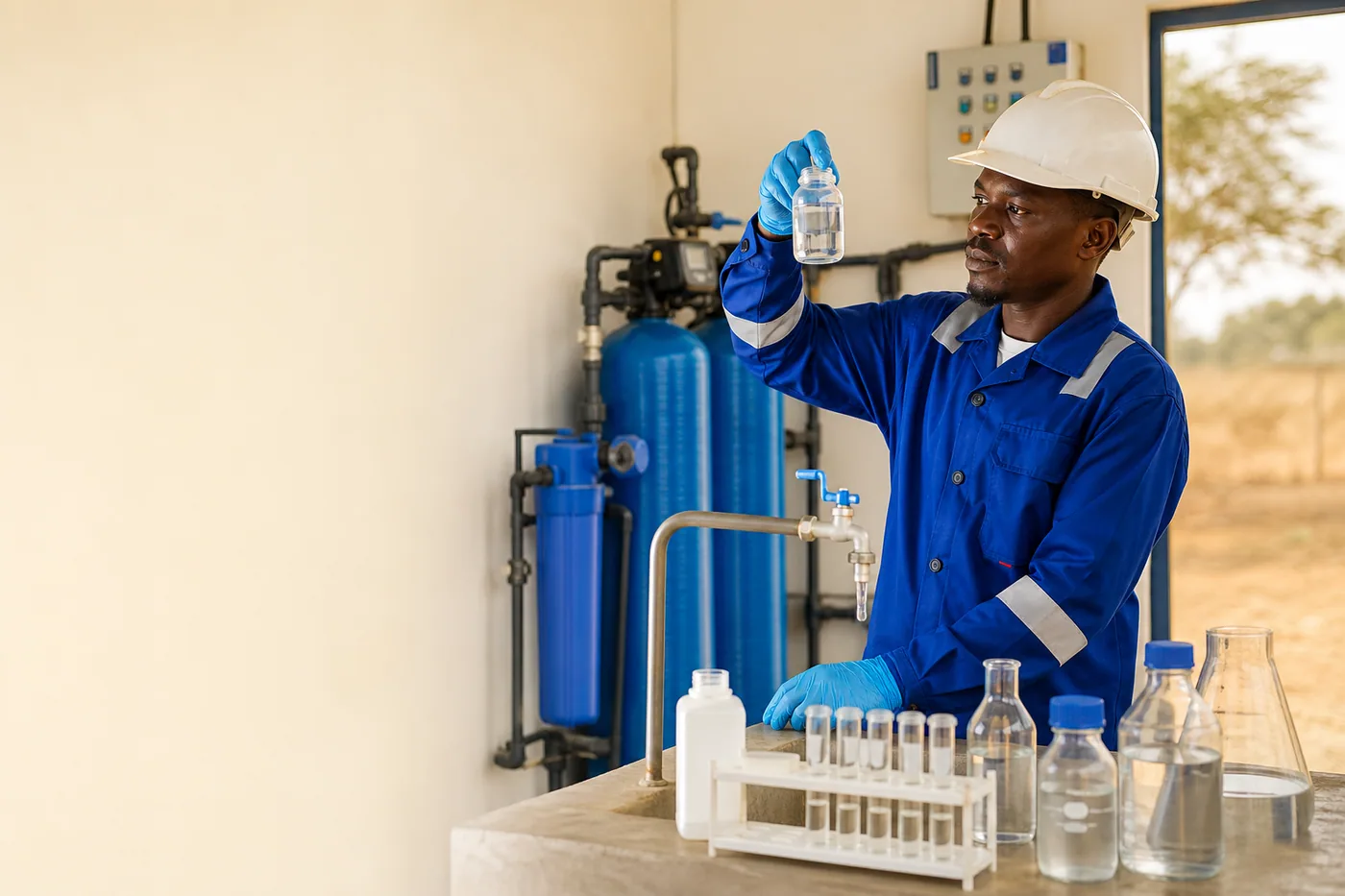
borehole water testing price is difficult to compare when laboratories and contractors quote different sampling, chemical and microbiological packages. This guide explains what affects the cost in Kenya, which questions to ask before paying, how to collect a representative sample and how to turn a laboratory report into a practical water-treatment decision.
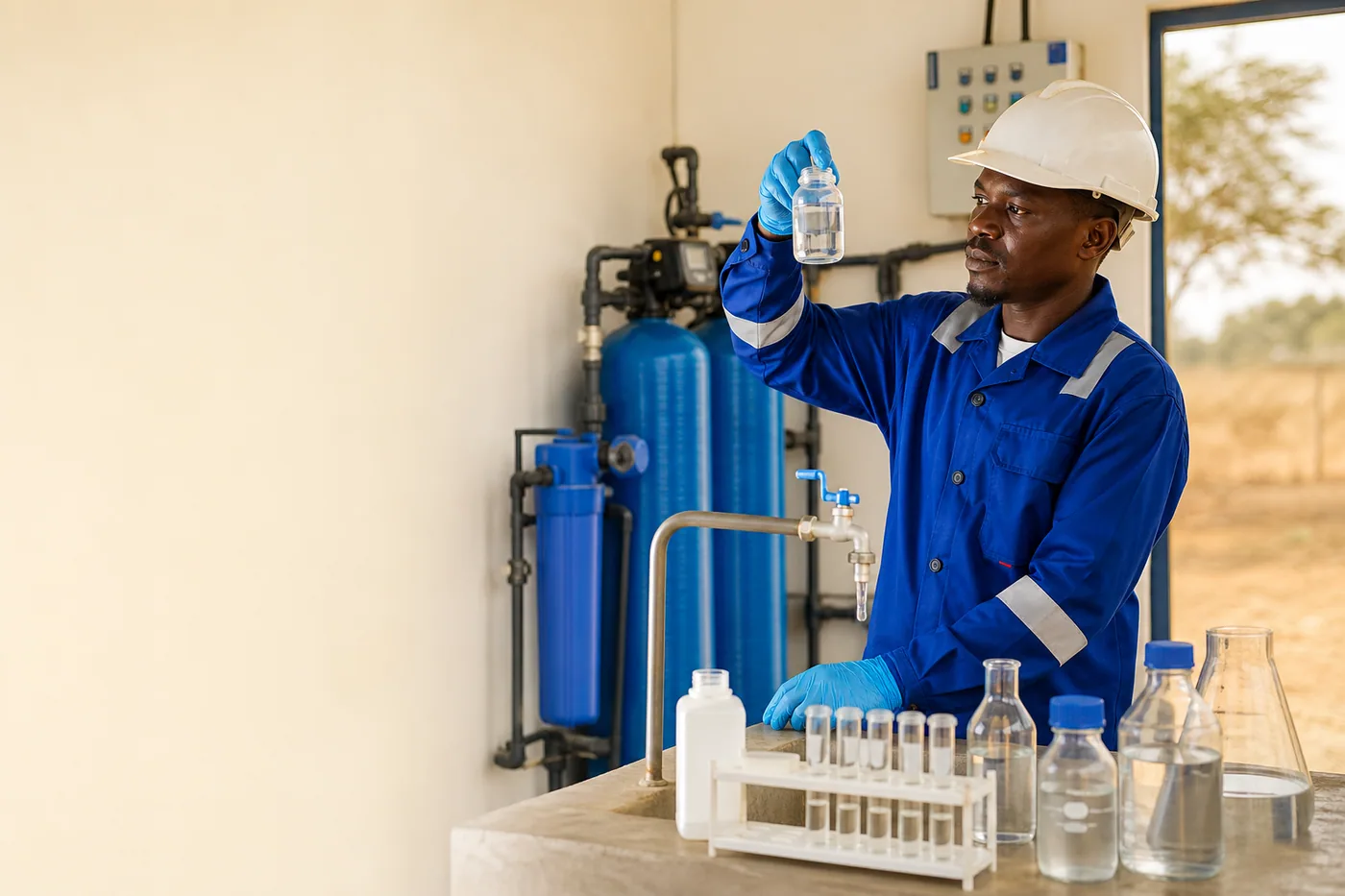
Why borehole water testing price varies in Kenya
A borehole water testing price can cover anything from a small screening panel to a broader laboratory analysis. The final scope depends on the intended water use, the number of samples, where samples are collected, whether microbiology is included, transport requirements, turnaround time and whether a professional interpretation or treatment recommendation is part of the service.
That means two quotations with different totals may not be competing for the same work. One may cover a single raw-water sample with basic chemistry. Another may include raw and treated samples, bacteriological testing, specialist parameters, sampling by a technician and a written interpretation. Before comparing borehole water testing price, place both quotations into the same line-by-line scope.
If the borehole has just been drilled, coordinate water testing with development and test pumping rather than treating it as an isolated purchase. Our borehole test pumping Kenya guide explains why borehole performance evidence and water-quality evidence answer different questions.
Borehole water testing price: define the intended use first
The most useful laboratory scope starts with what the water will be used for. Domestic drinking, livestock, irrigation, hotels, schools, food-related operations and industrial equipment can raise different quality questions. A borehole water testing price that is suitable for one purpose may omit parameters that matter for another.
- Domestic and institutional use: plan for a quality assessment that addresses health, acceptability and infrastructure concerns relevant to the intended supply.
- Irrigation: salinity and chemistry can matter for crops, soils and irrigation equipment.
- Livestock: suitability should be considered for the actual animals and production system.
- Boilers, laundries and process equipment: hardness, dissolved minerals and scaling potential can be operationally important.
- Treatment design: raw-water chemistry, required flow and target treated quality should guide equipment selection.
Tell the laboratory the intended uses before accepting the borehole water testing price. A good quotation should name the parameters or package contents instead of relying only on labels such as “full test.”
Borehole water testing price should separate sampling from laboratory analysis
Sampling has its own value. A technically capable laboratory can produce an accurate result for the bottle it receives, but that result may not represent the borehole if the sample was collected from a dirty hose, a stagnant storage tank or a tap affected by downstream plumbing when the objective was to assess raw borehole water.
Ask whether the borehole water testing price includes a site visit, sample containers, preservatives where required, field measurements, cold-chain or transport arrangements, microbiological sampling technique and delivery to the laboratory. If you will collect the sample yourself, request the laboratory’s instructions before collecting it.
Record the borehole identity, sampling point, date, time, sampler and operating condition. If the water has passed through treatment or storage, label that clearly. This prevents a later report from being interpreted as raw-borehole quality when it actually describes another part of the system.
Common components behind borehole water testing price
| Cost component | What it may include | Why it affects the quote |
|---|---|---|
| Sampling visit | Travel, technician time, field notes and sample collection | Distance, number of points and site access vary |
| Basic physical/chemical panel | Selected indicators of water chemistry and acceptability | Parameter count and analytical methods differ |
| Microbiological testing | Selected microbial indicators | Requires controlled collection, transport and laboratory handling |
| Specialist parameters | Parameters selected for a location, use or treatment question | May require separate methods or equipment |
| Multiple sample points | Raw water, storage, treated water or distribution points | Each sample creates additional analytical work |
| Interpretation | Comparison with the relevant intended-use criteria | May involve professional review beyond raw laboratory values |
| Urgent turnaround | Priority laboratory processing where available | Can change workflow and service cost |
Use this table to compare borehole water testing price quotations fairly. The goal is not to buy the longest parameter list. It is to buy enough evidence to answer the specific water-use or treatment question.
What should be tested before drinking borehole water?
Do not assume that clear, odourless water is suitable for drinking. Some important water-quality conditions do not change appearance. The correct scope should be agreed with a competent laboratory or relevant professional using the intended use and site context.
A borehole water testing price for potable-use assessment may therefore be broader than a small operational screening test. If the laboratory offers several packages, ask for the parameter list, units, methods and the basis they will use when interpreting the result. Keep the original laboratory report rather than relying only on a WhatsApp summary or verbal statement.
Our borehole water testing and treatment in Kenya guide explains how to read results and connect them with treatment choices.
Borehole water testing price for irrigation decisions
Irrigation creates a different question from drinking-water supply. Water chemistry can influence crop tolerance, soil conditions, emitter blockage and long-term irrigation performance. A borehole water testing price intended for irrigation should therefore be built around the agronomic decision rather than copied directly from a domestic package.
Provide the crop type, irrigation method, soil context and any existing problems such as white deposits, blocked emitters or declining plant performance. The laboratory or agronomic adviser can then recommend an appropriate analytical scope. Do not infer irrigation suitability from one parameter alone.
If irrigation is the main reason for drilling, also confirm that the tested borehole yield and storage arrangement can support the planned schedule. See borehole yield in Kenya and borehole water tank size Kenya.
How to compare borehole water testing price quotations
- Use one sampling objective. State whether you need raw-water characterization, drinking-water assessment, irrigation suitability or treatment verification.
- Compare named parameters. Do not compare package names without the actual analytical list.
- Check sample count. Confirm whether the quotation is for one sample or several points.
- Check sampling responsibility. State whether a technician visits the site or you deliver the sample.
- Check transport and preservation. This matters especially when timing and temperature influence sample integrity.
- Check turnaround. Confirm the expected reporting window rather than assuming “urgent.”
- Check interpretation. Ask whether the result includes professional comments or only laboratory values.
- Check taxes and travel. Make the final borehole water testing price comparable.
Use simple formulas to understand testing and treatment decisions
Testing cost is normally a service quotation rather than a universal formula, but two simple calculations help connect laboratory work with the water system.
In plain English, a simple analytical subtotal C can be thought of as the number of samples n multiplied by the comparable per-sample analytical cost c, before travel or special services. Actual laboratory pricing can use bundled packages, so use the supplier’s written quotation.
In plain English, treatment design flow Q relates the required volume V to the operating time t. A laboratory result tells you what is in the water; treatment equipment must also be sized for the flow you need.
Worked example: why the cheapest lab package can cost more later
Imagine a commercial property chooses a very small screening package because its borehole water testing price is lower. The result does not answer the treatment supplier’s design questions, so the property later pays for another sampling visit and a second analytical package. The first purchase was inexpensive, but it did not solve the decision.
A better approach is to identify the intended use, the expected flow and any visible symptoms first. The laboratory scope can then answer the treatment or operational question in one planned round where practical. This does not mean testing every possible parameter. It means choosing relevant evidence before purchasing equipment.
| Illustrative testing scope | Relative information index |
|---|---|
| Small screening scope | 35 |
| Use-specific scope | 72 |
| Treatment-design scope | 100 |
Features of our borehole water testing price service
| Feature | What it helps you do |
|---|---|
| Use-based test planning | Select a scope around drinking, irrigation, treatment or operational needs |
| Sampling-point planning | Distinguish raw borehole, stored and treated water |
| Laboratory coordination | Clarify containers, timing and delivery requirements |
| Result review | Organize the laboratory values around the intended decision |
| Treatment linkage | Use measured evidence before selecting treatment equipment |
| Retesting plan | Define follow-up checks after treatment or a material water-quality change |
Advantages of planning the borehole water testing price around the decision include:
- Fewer repeat tests caused by missing parameters.
- More representative results because the sampling point is defined.
- Better treatment quotations because suppliers receive the same laboratory evidence.
- Clearer records for future maintenance and comparison.
- Less equipment guesswork because treatment is not selected from appearance alone.
Borehole water testing price: indicative service tiers
The exact borehole water testing price should come from a current written quotation because laboratories, sampling locations and analytical requirements differ. The tiers below show how to request comparable scope; they are not quoted market prices.
| Testing tier | Indicative price | Best used for |
|---|---|---|
| Screening package | $— | A defined preliminary question using a limited agreed parameter set |
| Use-specific laboratory package | $— | Domestic, irrigation, institutional or operational suitability questions |
| Treatment-design package | $— | Raw-water characterization for a treatment proposal and design flow |
| Verification package | $— | Raw-versus-treated or post-commissioning performance checks |
When to test a new borehole
Coordinate sampling with the completion and commissioning process. The borehole should be properly developed, and the sampling objective should be clear. If the purpose is to characterize the groundwater, avoid confusing temporary construction effects or downstream storage conditions with the source itself.
Keep the test alongside the drilling log and pumping-test report. The borehole water testing price is small compared with the value of having a defensible baseline for future water-quality or treatment comparisons.
When to repeat borehole water testing
Retesting can be appropriate when the intended use changes, when treatment is installed or modified, when water appearance or taste changes, when construction or rehabilitation work has occurred, or when a planned monitoring programme requires it. The interval should fit the risk, use and operating context rather than one universal calendar rule.
If the borehole begins producing sand, reduced flow or other operational symptoms, investigate those separately as well. Water-quality testing does not replace mechanical or hydraulic diagnosis. Use borehole maintenance for the wider system checklist once that article is live.
Water test kits versus laboratory testing
Field or home test kits can be useful for selected screening measurements, but they do not automatically replace a laboratory analysis. Their value depends on the parameter, kit range, calibration, user technique and the decision being made. A low borehole water testing price for a kit should not be compared directly with a laboratory package that measures different parameters with different methods.
Use kits for clearly defined monitoring tasks and laboratories when the decision requires laboratory-quality evidence. Keep the method and date with every result so trends are meaningful.
How testing links to treatment cost
Treatment cost can be much larger than the borehole water testing price, which makes testing a valuable design step. Different measured problems require different processes, and the equipment also needs to match peak flow, daily volume, pressure, waste handling and the operator’s maintenance capacity.
If iron is the problem, see how to remove iron from borehole water in Kenya. For fluoride, see fluoride removal from borehole water in Kenya. For broader options, use borehole water treatment systems in Kenya.
Questions to send with your laboratory quote request
- What are the exact parameters and methods included?
- Is the borehole water testing price per sample or per package?
- Does a technician collect the sample?
- Are sample containers and preservation materials supplied?
- Are transport, travel and taxes included?
- What is the normal turnaround time?
- Does the report include interpretation or only analytical values?
- Can the package be adjusted for drinking, irrigation or treatment design?
- How should microbiological samples be handled and delivered?
- What information should accompany the sample?
How to get started
Send the borehole location, intended water use, whether the source is new or existing, any treatment already installed, the expected daily demand and the question you need the laboratory to answer. If you have earlier reports, include them so the new test can be compared with previous results.
We can then structure the borehole water testing price request around relevant sampling points and the intended decision rather than ordering an undefined “full test.”
Borehole water testing price FAQs
How much is borehole water testing in Kenya?
There is no single universal amount. The cost depends on sample count, analytical parameters, sampling, transport, turnaround and whether interpretation is included. Request the exact parameter list with the quotation.
Why do laboratories give different borehole water testing price quotes?
Their packages may contain different parameters and services. Compare named tests, sample count, sampling responsibility, transport and interpretation before comparing totals.
Can I collect the borehole water sample myself?
Sometimes, but obtain the laboratory’s container, preservation, hygiene and delivery instructions first. Poor sampling can make an otherwise accurate laboratory result unrepresentative.
Do I need water testing before buying a treatment system?
Yes, treatment should be based on representative laboratory evidence, target flow and intended use rather than appearance or a generic equipment package.
Is a home water test kit enough?
A kit can help with selected screening measurements, but whether it is sufficient depends on the parameter and decision. Laboratory analysis may be needed for a broader or higher-confidence assessment.
Should treated water be tested again?
Yes, follow-up testing can verify whether the installed treatment is achieving the intended water-quality objective under normal operation.
What should I keep after testing?
Keep the original laboratory report, sample point, date, sampling notes, intended use, treatment settings if applicable and any follow-up results.
Use borehole water testing price to buy the right evidence
borehole water testing price should be judged by whether the testing scope answers the decision you need to make. Define the use, sample point and parameters before comparing totals, protect sample integrity, keep the laboratory report and use measured results before committing to treatment equipment.
Borehole water testing price and sample chain of custody
borehole water testing price should also reflect how the sample is identified, handled and delivered. A laboratory result is only as useful as the connection between the reported sample and the water source you intended to assess. Before collection, label the sampling point clearly and record whether the water came directly from the borehole, after storage, after treatment or from a distribution tap. This prevents a later report from being used for the wrong decision.
Where a technician collects the sample, ask what site information will be recorded and whether the quotation includes containers, transport and any handling required by the chosen laboratory package. If you collect the sample yourself, get the laboratory instructions first. The goal is to avoid paying a borehole water testing price for a result that cannot answer the original question because the sample point or handling was unclear.
How to avoid paying a second borehole water testing price
Repeat sampling is sometimes necessary, but avoidable repeat work often starts with an incomplete brief. Before ordering a package, tell the laboratory whether your priority is drinking-water assessment, irrigation suitability, treatment design, treatment verification or a change in water quality. Then ask whether the proposed parameter list actually supports that decision. If a treatment supplier will use the report, have the supplier identify the information needed before the sample is collected.
Keep previous reports and compare like-for-like sample points when monitoring change over time. If the source is being tested after rehabilitation, pump replacement or treatment changes, record that context with the new result. For the wider decision process, use borehole water testing and treatment in Kenya. A well-defined scope makes the borehole water testing price easier to compare and gives each test a clearer purpose in the life of the water system.