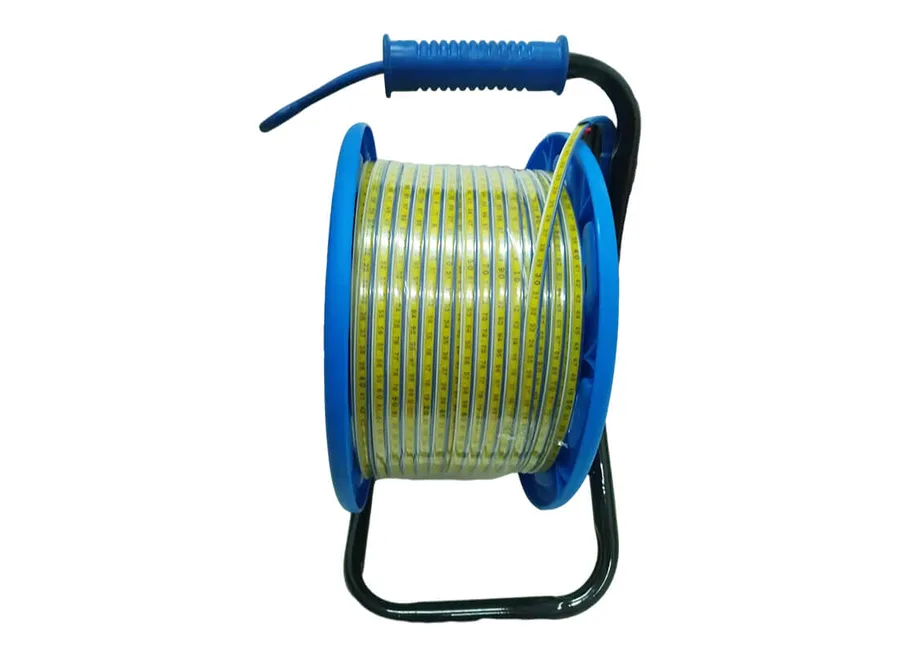
static water level vs pumping water level is the comparison you need when a borehole owner wants to understand drawdown, pump setting, source performance or a change in water supply. This guide explains what each measurement means, how to record them consistently, how they relate to test pumping, and how to use the difference without confusing water level with total borehole depth.
Why static water level vs pumping water level matters
static water level vs pumping water level separates the resting groundwater condition from the level observed while water is being abstracted. That distinction helps you understand how the source responds to pumping. It also prevents a common mistake: treating a single water-level reading as if it described the entire borehole.
The static level is taken under a defined non-pumping or recovered condition. The pumping level is taken while the borehole is operating at a stated discharge and after a stated period. Because the operating conditions differ, the two numbers should never be compared without context. Use the borehole test pumping Kenya guide to see how discharge, drawdown and recovery fit together.
For pump selection, static water level vs pumping water level is more useful than final drilled depth alone. The pump must operate under the hydraulic conditions that exist during pumping, while total drilled depth mainly describes the physical completion.
Static water level vs pumping water level: step-by-step method
A reliable static water level vs pumping water level comparison starts with a fixed reference point. Choose a clearly documented point at the headworks or top of casing and use that same point for both measurements. If the reference changes, the apparent difference can be caused by the measuring method rather than by the groundwater response.
- Review the existing records. Find the drilling log, pumping-test report and any previous water-level readings.
- Define the reference point. Record exactly where the measurement starts.
- Allow the source to reach the intended resting condition. Record recent pumping history so the static reading has context.
- Measure the static level. Record the date, time, instrument and reference point.
- Start the controlled pumping condition. Record the discharge or a reliable flow reference.
- Measure the pumping level at stated times. Do not report a pumping level without the operating condition.
- Record recovery after pumping stops. Recovery adds context to the source response.
- Compare with history. Similar tests taken under comparable conditions are more useful than isolated readings.
The first relationship is drawdown:
In plain English, drawdown s is the difference between the pumping water level and the static water level when both are measured from the same reference point.
How static water level vs pumping water level affects pump sizing
static water level vs pumping water level helps a pump designer understand the lift that exists when the source is operating. A pump selected only from static level can be misleading because the water level may fall during pumping. Conversely, using total borehole depth as the lift can overstate the duty if the pumping water level remains much shallower than the bottom.
The complete pump duty also includes delivery elevation, pipe friction and required pressure. That is why our borehole pump sizing in Kenya guide treats water level as one part of total dynamic head rather than as a standalone pump-selection number.
Choosing the right static water level vs pumping water level approach
A good static water level vs pumping water level record contains more than two depths. It should identify the discharge, elapsed pumping time, reference point, recent operating history and recovery observations. Without those details, a future technician may not be able to reproduce the comparison.
| Record item | Why it matters | Common mistake |
|---|---|---|
| Reference point | Makes repeated measurements comparable | Starting from a different headworks point |
| Static water level | Provides the resting baseline | Measuring before adequate recovery for the purpose |
| Pumping water level | Shows operating response | Reporting it without discharge or elapsed time |
| Discharge | Defines the pumping condition | Comparing readings taken at different flows |
| Recovery observations | Add context after pumping stops | Ending the test record when the pump stops |
A second useful relationship is specific capacity:
In plain English, specific capacity SC is the discharge Q divided by drawdown s under the stated test condition. It is most useful when later measurements are made in a comparable way.
Worked example: static water level vs pumping water level
Imagine a borehole that has an older pumping-test report and a new complaint that the tank takes longer to fill. The original report includes static level, pumping level and discharge. A new assessment repeats the measurements from the same reference point and at a similar operating rate. If the static water level vs pumping water level pattern has changed materially, the source or operating condition deserves closer investigation.
Now imagine the new water-level pattern is similar to the original test but the delivered flow is lower. In that case, the investigation should also focus on the pump, rising main, electrical supply, controls, valves and downstream restrictions. Static water level vs pumping water level helps narrow the fault, but it does not replace a complete system diagnosis.
This is why repeatable records are valuable. A single reading can show what is happening today. A series of comparable readings can show whether the borehole, pump or demand pattern is changing over time.
| Illustrative record factor | Relative priority index |
|---|---|
| Consistent reference point | 100 |
| Recorded discharge | 92 |
| Elapsed pumping time | 86 |
| Recovery record | 78 |
Features of our static water level vs pumping water level service
| Feature | What it helps establish |
|---|---|
| Historical-record review | Whether current readings can be compared with commissioning data |
| Reference-point documentation | A repeatable measurement origin |
| Static-level measurement | The resting condition for the stated assessment |
| Controlled pumping measurement | The operating level at a defined discharge |
| Drawdown calculation | The change between resting and pumping conditions |
| Recovery observation | How water level responds after pumping stops |
| Handover sheet | A baseline for maintenance and future pump work |
Advantages of documenting static water level vs pumping water level include:
- Better pump decisions because operating lift is not confused with total borehole depth.
- Clearer performance trends because later measurements can be compared with a baseline.
- Earlier fault separation between source, pump and downstream problems.
- More useful maintenance records because every reading has operating context.
- Better dry-run diagnosis because the pumping level can be reviewed against pump setting and protection events.
- Stronger rehabilitation decisions because hydraulic changes can be measured before major work.

Static water level vs pumping water level pricing
static water level vs pumping water level assessment pricing depends on access, whether a flow measurement is included, the duration and purpose of pumping, installed equipment and whether the visit is part of a formal pumping test or a maintenance diagnosis. A quotation should identify what readings and records will be handed over.
| Scope | Indicative price | What to confirm |
|---|---|---|
| Static-level check | $— | Reference point, recent pumping history and recorded result |
| Pumping-level check | $— | Discharge, elapsed time and water-level readings |
| Performance comparison | $— | Historical records, current flow and drawdown review |
| Formal pumping-test support | $— | Test method, duration, measurements and report scope |
Static water level vs pumping water level during maintenance
During maintenance, static water level vs pumping water level can help determine whether a complaint comes from the source or from equipment. If the water-level response is similar to the historical baseline but the tank fills more slowly, inspect the pump, pipework, electrical condition and restrictions. If drawdown has changed substantially under a comparable flow, investigate the source and operating conditions further.
Use the borehole maintenance checklist to combine water-level evidence with controller alarms, pressure, sand, water quality and service history. One measurement should support the diagnosis, not replace it.
Static water level vs pumping water level and borehole yield
Borehole yield is not the same as static water level. A source can have a relatively shallow resting water level yet respond strongly to pumping, while another can have a deeper resting level but behave differently under the same discharge. The useful relationship comes from measured discharge and water-level response.
The borehole yield in Kenya guide explains how source performance should be compared with demand. Static water level vs pumping water level adds the hydraulic response needed to understand the operating condition.
Static water level vs pumping water level and pump setting
Pump setting is a separate depth. The pump should not be described as being “at the pumping water level.” Its installation position must be recorded independently and checked against the expected operating water level, construction and manufacturer requirements. A change in pumping water level can affect the operating margin even when the pump has not moved.
For that reason, a static water level vs pumping water level record should include the known pump setting where it is relevant to dry-run protection or pump replacement. The rising main and submersible cable details should also remain in the equipment file.

Static water level vs pumping water level after a dry-run trip
A dry-run trip is a protection event, not a diagnosis by itself. Record when the event occurs, the operating flow, tank level, controller indication and any available water-level information. Repeated events can come from an operating rate that is too high, changing source conditions, sensor or controller issues, or another equipment problem.
A structured static water level vs pumping water level check can show whether the pumping level approaches the pump or protection threshold under the stated condition. Do not keep resetting protection without understanding the cause.
Static water level vs pumping water level for solar pumping
Solar pumping can produce a changing operating rate through the day. Therefore, water-level measurements should note the controller condition and actual discharge when possible. Comparing a low-sun measurement with a peak-output measurement without recording the difference can create a misleading trend.
When using static water level vs pumping water level for a solar system, connect the result to daily storage and pumping strategy. The solar vs electric borehole pump Kenya guide explains how the power source affects operating schedules.
Records to keep for static water level vs pumping water level
- Borehole identification and location.
- Measurement date and time.
- Fixed reference point.
- Recent pumping history before the static reading.
- Static water level.
- Pumping discharge or flow reference.
- Pumping water level at stated elapsed times.
- Recovery observations after shutdown.
- Known pump setting where relevant.
- Instrument and technician notes.
These records make static water level vs pumping water level useful beyond one visit. Store them with the drilling log, pumping-test report and pump-installation information.
Common static water level vs pumping water level mistakes
- Using different reference points for the two readings.
- Calling a partially recovered level “static” without noting the condition.
- Reporting pumping level without the discharge or elapsed time.
- Comparing readings taken at very different flow rates.
- Confusing water level with total borehole depth.
- Confusing pump setting with pumping water level.
- Ignoring recent pump or demand changes when comparing history.
- Using one reading to justify pump replacement without checking the complete system.
How to get started with static water level vs pumping water level
Gather the pumping-test report, pump details and any previous water-level measurements. Define the complaint or decision: pump sizing, maintenance, dry-run diagnosis, rehabilitation planning or routine monitoring. Then choose a fixed reference point and a measurement plan that can be repeated later.
A useful static water level vs pumping water level assessment should end with a clear record, not only a verbal number. That record can then support pump sizing, operating limits and future performance comparisons.
Static water level vs pumping water level FAQs
What is static water level vs pumping water level?
Static level is the resting water level under the defined non-pumping condition. Pumping level is the water level while the borehole is being pumped at a stated operating condition.
What is drawdown?
Drawdown is the difference between pumping water level and static water level when both readings use the same reference point.
Is static water level the same as borehole depth?
No. Static level identifies the water surface; total depth identifies the bottom of the accessible completed borehole.
Can pumping water level be used to choose a pump?
It is an important input, but pump sizing also needs required flow, delivery elevation, pipe losses and required pressure.
Why must discharge be recorded?
The pumping water level depends on the operating condition. A comparison is more useful when the discharge is known.
Should recovery be recorded?
Yes. Recovery observations add context after pumping stops and can support interpretation of source behavior.
Can solar pumping change the comparison?
The operating rate may vary through the day, so record the actual pumping condition when taking water-level readings.
Make static water level vs pumping water level repeatable
static water level vs pumping water level is most valuable when both measurements use the same reference point and the pumping condition is clearly documented. Keep discharge, elapsed time, recovery and pump-setting information with the record. That turns two water-level numbers into useful evidence for pump sizing, maintenance and long-term borehole management.
Interpreting changes in static water level vs pumping water level
A change in static water level vs pumping water level should be interpreted carefully. A deeper static level can reflect a different groundwater condition at the time of measurement, while a greater pumping drawdown can reflect a changed operating rate, pump duty or source response. Before concluding that the borehole is deteriorating, compare the new readings with the same reference point, a similar pumping rate and comparable recent operating history.
Demand changes also matter. If a property now pumps for longer periods or has installed a larger pump, the new static water level vs pumping water level pattern may reflect a different operating regime rather than a construction failure. Record equipment changes and major increases in demand with the water-level history so future comparisons remain meaningful.
If the source is being assessed for rehabilitation, take pre-work measurements and repeat them after the intervention under comparable conditions. This creates an evidence trail for whether hydraulic performance improved. Use the borehole rehabilitation Kenya guide to connect the measurements with a diagnosis rather than choosing a treatment method first.
Using static water level vs pumping water level in long-term monitoring
Long-term monitoring does not need to produce complicated reports. A simple table that records the date, static level, pumping flow, pumping level, elapsed time and recovery can become extremely useful after several service visits. The value comes from consistency. A static water level vs pumping water level trend collected in the same way can reveal changes that are easy to miss during daily operation.
Keep the records with flow-meter readings, controller alarms, pump replacements and water-quality reports. If tank filling slows later, the maintenance team can check whether water-level response changed at the same time. If the water-level trend stayed stable, attention can shift toward the pump or downstream system. This is how static water level vs pumping water level becomes a practical maintenance tool rather than a one-time test result.