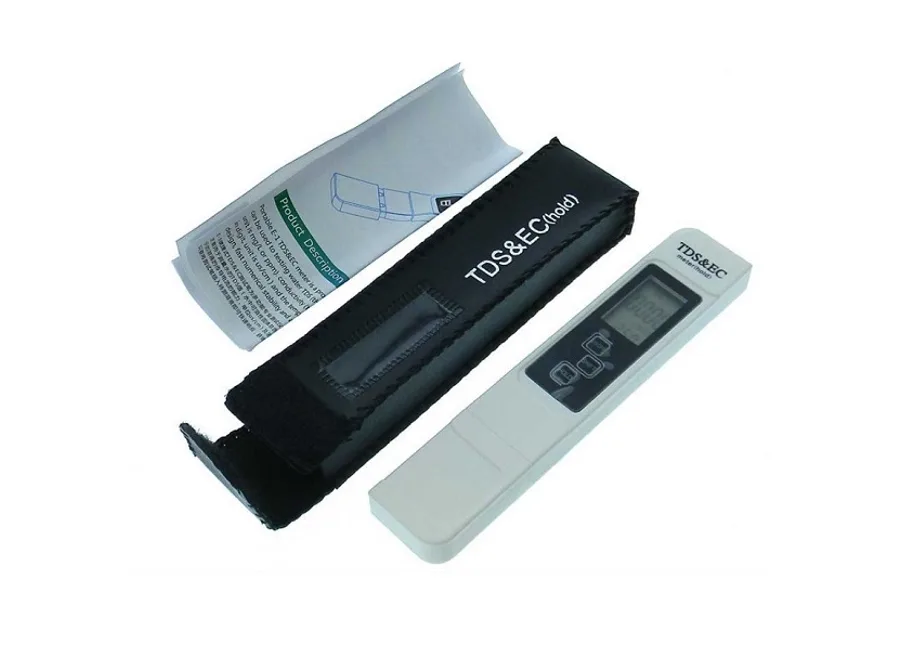
water testing kit Kenya searches often mix two different needs: quick field screening and formal laboratory analysis. This guide explains what a portable borehole water test kit can help you measure, what it cannot prove, how to use field results responsibly, and when a laboratory test is still the right next step.
Why water testing kit Kenya buyers need a clear testing objective
A field kit is useful only when you know what question you are trying to answer. A homeowner may want a quick screening result before commissioning a full laboratory panel. A borehole technician may want to compare readings before and after treatment. A farm may want to track selected indicators over time. A treatment operator may want a simple operational check between formal laboratory tests.
Those are different use cases. The correct water testing kit Kenya decision begins by listing the measurements you need, the range and accuracy required, how often the test will be repeated, and what decision will follow from the result.
For drinking, irrigation, treatment design or compliance-related decisions, do not assume a portable kit replaces all laboratory work. Use borehole water testing and treatment in Kenya to plan representative sampling and laboratory analysis.
Water testing kit Kenya: field screening versus laboratory analysis
A field kit is designed for portability and quick readings. A laboratory can use controlled methods, specialist instruments and quality procedures that are not practical to reproduce in a small case. The two approaches are therefore complementary rather than interchangeable.
| Testing approach | Best use | Limitation to remember |
|---|---|---|
| Portable field kit | Fast screening, routine monitoring and comparing selected readings | Only measures what the kit is designed and maintained to measure |
| Laboratory analysis | Broader water-quality assessment, treatment design and higher-confidence decisions | Requires representative sampling, transport and turnaround time |
| Field + laboratory | Baseline laboratory evidence plus frequent operational monitoring | Needs a clear record so field and lab results are not confused |
The strongest water testing kit Kenya workflow often starts with a proper laboratory baseline, then uses field testing to monitor selected indicators between formal analyses.
Water testing kit Kenya for new boreholes
After a new borehole is developed and test pumped, the source should be sampled for the intended use. A portable kit can provide immediate field observations, but the project should still keep the laboratory report as the formal baseline where laboratory evidence is required.
Store the field reading with the date, sampling point, instrument or kit used and the borehole operating condition. This creates a useful record for later comparison. It also prevents an isolated reading from being remembered as if it were a complete water-quality assessment.
What to check before buying a water testing kit Kenya
Start with the product’s actual measurement capabilities rather than the number of items in the case. A kit with many accessories is not automatically more useful than one that accurately measures the parameters you need.
- Which parameters are included?
- What measurement ranges apply?
- What resolution or reading steps are provided?
- Does the kit require calibration?
- Are reagents or strips replaceable?
- How should components be stored?
- How long do consumables remain usable?
- Is the kit intended for field screening, operational monitoring or another use?
- Can replacement consumables be sourced locally?
A good water testing kit Kenya purchase includes the future cost of consumables and calibration, not only the initial case price.
Live product reference for water testing kit Kenya
Borehole Drillers Kenya currently lists a Portable Borehole Water Test Kit at KSh 36,500. That is a live catalog price verified for this article. Confirm current stock, included components and the exact measurement capability on the product page before ordering because a price alone does not define the testing scope.
The listing should be treated as equipment supply. If you need a professional water-quality assessment, separate the equipment purchase from laboratory sampling and interpretation. The existing borehole water testing price guide covers laboratory-service scope and quotation comparison.
Water testing kit Kenya and representative sampling
Even a correctly functioning kit can produce a misleading result if the sample does not represent the water you intend to assess. Decide whether you are testing raw borehole water, stored water, treated water or a distribution point. Do not mix those locations in one record.
For raw borehole monitoring, note how long the pump has been running and where the sample was collected. For treatment monitoring, label the sample as pre-treatment or post-treatment. If a tank or pipe has been stagnant, record that context rather than assuming the reading describes the aquifer.
This sampling discipline is one of the most important parts of a useful water testing kit Kenya programme.
How to create a field-testing baseline
A baseline is the first set of readings you trust enough to compare with future measurements. Ideally, create it when the system is operating normally and close in time to a representative laboratory analysis. Then record the same field parameters at the same sampling point using the same method.
In plain English, the change in a monitored parameter is the new reading minus the baseline reading. A change is a signal to investigate; it is not automatically a diagnosis.
You can also express change as a percentage when that is meaningful for the parameter being monitored.
In plain English, percentage change compares the difference with the baseline value. Use it only where a percentage comparison makes sense and never replace the actual units in your record.
Water testing kit Kenya for treatment monitoring
Field testing can be especially useful when a treatment system needs frequent operational checks. The relevant parameter depends on the treatment process and what the kit actually measures. Keep the treatment settings, filter changes and maintenance events in the same log so changes in readings can be interpreted in context.
For example, if a reading begins to move away from the established baseline after a maintenance interval, the operator has a reason to inspect the system or confirm the result with a laboratory. This is more useful than waiting until users complain about taste, staining or performance.
Use borehole water treatment systems in Kenya for the wider treatment-design process.
Water testing kit Kenya for irrigation monitoring
Farmers may use field equipment to track selected indicators that matter to irrigation management, but crop and soil suitability should be interpreted with appropriate agronomic advice. A portable kit does not turn one measurement into a complete irrigation-suitability conclusion.
If borehole water is being considered for farming, combine field monitoring with the source’s laboratory chemistry, tested yield, storage and irrigation schedule. See can borehole water be used for irrigation for the full decision framework.
Worked example: field trend versus one-off reading
Imagine a borehole system with a laboratory baseline and monthly field readings. The first several readings remain close to the normal range. Later, one monitored parameter begins to move away from the established pattern. Rather than buying treatment immediately, the operator repeats the field test, checks the kit condition and sampling method, then obtains a laboratory test if the change persists.
This workflow shows the value of water testing kit Kenya monitoring. The kit provides an early signal, while confirmation prevents an operational decision from being based on one questionable reading.
| Illustrative monitoring point | Relative reading index |
|---|---|
| Baseline | 48 |
| Routine reading | 52 |
| Changed reading | 78 |
Features to compare in a water testing kit Kenya purchase
| Feature | Why it matters |
|---|---|
| Parameter set | Must match the measurements you actually need |
| Measurement range | Needs to cover expected water conditions |
| Consumables | Reagents or strips create recurring cost |
| Calibration | Some instruments require regular checking |
| Storage case | Protects field equipment during transport |
| Replacement supply | Determines whether the kit remains usable long-term |
| Instructions | Supports consistent sampling and reading technique |
| Record keeping | Makes trend monitoring more useful than isolated results |
Advantages of a well-planned water testing kit Kenya workflow include:
- Faster screening when you need an immediate field observation.
- Better trend monitoring because the same parameters can be checked repeatedly.
- Earlier maintenance signals for selected treatment-system changes.
- More informed laboratory requests when a field trend needs confirmation.
- Better records when readings are logged with sampling context.
Water testing kit Kenya pricing
The live Borehole Drillers Kenya catalog currently lists the Portable Borehole Water Test Kit at KSh 36,500. Confirm the current product page before ordering. Installation is generally not the main cost for a portable kit, but replacement reagents, calibration items, batteries or other consumables may create future operating costs depending on the exact components.
| Scope | Current/indicative price | What to confirm |
|---|---|---|
| Portable Borehole Water Test Kit | KSh 36,500 | Exact included parameters, stock and consumables |
| Replacement consumables | $— | Reagent/strip type, quantity and shelf life |
| Professional laboratory analysis | $— | Parameter list, sampling and interpretation |
| Field + laboratory monitoring plan | $— | Sampling points, frequency and reporting |
When a water testing kit Kenya result should trigger a lab test
Confirmatory laboratory work is appropriate when a field result changes materially from the established baseline, when the intended water use changes, when a treatment system is being designed, when a health-related question must be answered, or when a result will support a formal technical or regulatory decision.
A field kit can also be checked against laboratory results periodically. If the two approaches consistently disagree, investigate sampling technique, kit condition, calibration, consumables and whether they are actually measuring the same thing.
How to store and maintain a field test kit
Follow the product instructions for storage temperature, cleanliness, calibration and consumable handling. Keep reagents or strips dry and protected as required. Replace expired or contaminated consumables instead of trying to interpret uncertain results.
After field work, clean reusable components as instructed and return everything to the case. Record any damage or missing items immediately. A water testing kit Kenya is only useful when the next user can trust that it has been maintained properly.
How to record field results
A useful record includes the borehole or system name, exact sampling point, date, time, operator, kit or instrument identification, measured value, unit, calibration status where relevant, and any unusual operating conditions. If the system has treatment, record whether the sample was collected before or after treatment.
Photographs can help document sampling location, but the written measurement record remains essential. Keep laboratory reports in the same project folder so field trends can be compared with higher-confidence reference data.
Common water testing kit Kenya mistakes
- Buying a kit without checking which parameters it actually measures.
- Using expired or poorly stored consumables.
- Testing from an undefined sampling point.
- Comparing raw-water and treated-water readings as if they are the same location.
- Assuming one field reading proves drinking-water safety.
- Skipping calibration or control checks required by the equipment.
- Writing down a number without units or date.
- Making an expensive treatment decision from one unconfirmed field result.
How to build a practical water testing kit Kenya routine
- Define the exact monitoring objective.
- Choose parameters the kit can genuinely measure.
- Create a representative sampling point.
- Establish a baseline alongside laboratory evidence where appropriate.
- Use the same method and units each time.
- Record operating conditions and maintenance events.
- Repeat unexpected readings before acting.
- Escalate persistent changes to laboratory analysis or professional review.
Water testing kit Kenya FAQs
How much is a water testing kit in Kenya?
The live Borehole Drillers Kenya Portable Borehole Water Test Kit is currently listed at KSh 36,500. Confirm current stock, contents and price on the product page before ordering.
Can a field water test kit replace a laboratory?
Not for every decision. Field kits are useful for selected screening and monitoring, while laboratory analysis is appropriate when broader or higher-confidence evidence is required.
Can I test borehole water at home?
You can use suitable field equipment for the parameters it is designed to measure, but interpret the result within the kit’s limits and use laboratory testing when the decision requires it.
What is the best sampling point?
The correct point depends on the question. Clearly distinguish raw borehole water, stored water and treated water, and keep the same point for trend comparisons.
How often should I use a field kit?
Frequency should fit the operating risk and monitoring objective. A treatment plant may need more frequent checks than a stable domestic system.
What should I do if a field reading changes suddenly?
Repeat the test, check sampling method and kit condition, and obtain laboratory confirmation when the change persists or the decision is important.
Do test-kit consumables expire?
Some reagents, strips and components can have storage or expiry limits. Follow the exact product instructions and replace uncertain consumables.
Use water testing kit Kenya results as evidence, not certainty
water testing kit Kenya equipment can make borehole and treatment monitoring faster, but the value comes from disciplined sampling, correct use and good records. Define the objective, build a baseline, track trends and use laboratory confirmation when the question exceeds the kit’s capabilities.
Water testing kit Kenya quality-control checklist
A repeatable field-testing programme needs a simple quality-control routine. Before each monitoring round, inspect the case, confirm the required consumables are present, check storage condition and review any calibration or control procedure specified for the equipment. If a component is damaged or a reagent is questionable, replace it before collecting a reading that may influence a technical decision.
Use a clean sampling container where the method requires one and avoid cross-contamination between sampling points. Label raw borehole water, stored water and treated water separately. If several people use the same water testing kit Kenya, keep one written procedure in the case so the technique does not change from operator to operator.
Trend interpretation also benefits from consistency. Compare results collected at similar operating conditions where practical. A reading taken immediately after a long shutdown may not be directly comparable with a reading taken after hours of normal pumping. Record those conditions instead of discarding a useful result or treating every variation as a water-quality failure.
How to plan consumables and replacement cost
The purchase price is only the first budget line. Depending on the exact kit, future cost can include strips, reagents, calibration solutions, batteries, probes or other replaceable items. Build a small inventory plan around the number of tests expected each month and the storage life of consumables. This keeps the water testing kit Kenya usable instead of allowing it to become an incomplete case after the first few monitoring rounds.
For organizations, assign responsibility for the kit. One person should know where it is stored, when consumables were opened, which items are running low and where the results are filed. That simple ownership improves reliability and reduces duplicate purchasing.
When portable testing saves time
Portable testing is especially useful when a technician needs an immediate comparison at the source, tank and treated-water line, when a treatment adjustment must be observed during commissioning, or when a routine monitoring visit would otherwise wait days for a laboratory result. The speed is valuable because it supports faster troubleshooting.
However, speed should not be confused with final certainty. The strongest workflow uses the portable result to guide the next action: continue monitoring when readings are stable, inspect equipment when the change has an obvious operational cause, or collect a representative laboratory sample when confirmation is needed. This layered approach is what makes a water testing kit Kenya a useful operational tool rather than a replacement for every other form of water analysis.