
borehole drilling for construction sites Kenya requires more planning than simply drilling a water source before building work starts. This guide shows developers, contractors and property owners how to define temporary and permanent water demand, coordinate access and site controls, plan storage and pumping, compare quotations, and hand over a borehole that can remain useful after construction.

Why borehole drilling for construction sites Kenya needs an early plan
borehole drilling for construction sites Kenya can support a project during construction and later become part of the completed property’s water system. That creates two different planning stages: the temporary construction demand and the long-term demand after handover.
If the borehole is planned only for the immediate site, the final pump, storage, treatment or distribution arrangement may not match the completed building. Conversely, designing only for the future building can ignore temporary access, construction sequencing and changing site conditions while work is active.
Start with what you need before drilling a borehole in Kenya and then coordinate the drilling package with the construction program.
Project tip: decide early whether the borehole is temporary construction infrastructure, a permanent asset, or both. That decision changes the design, handover and budget.
borehole drilling for construction sites Kenya: step-by-step method
A structured borehole drilling for construction sites Kenya process starts with the water brief, then aligns hydrogeology, permits, site access, drilling, testing, pumping and storage with the construction schedule.
- Define the water uses. Separate construction activities, worker welfare where applicable, cleaning, landscaping and the future building demand.
- Decide the permanent role. Confirm whether the borehole will serve the finished property after construction.
- Complete the technical siting process. The drilling point should reflect hydrogeology, permanent infrastructure and source-protection needs.
- Coordinate site access. Review the route to the drilling point before heavy drilling equipment is mobilized.
- Plan the drilling window. Avoid clashes with excavations, cranes, deliveries, temporary structures or changing site routes.
- Test the completed borehole. Use test pumping and water-quality information before final pump and storage decisions.
- Design temporary and permanent distribution. Keep construction hoses or temporary lines separate from the final building system where appropriate.
- Commission and document. Retain the borehole, pump, water-quality and control records for the completed project.
A simple daily-demand relationship is:
In plain English, daily water demand can be built from the flow and duration of each planned use. The project team should use measured or specification-based requirements instead of inventing one universal construction-site allowance.
How to budget borehole drilling for construction sites Kenya
For borehole drilling for construction sites Kenya, the budget should separate hydrogeological work, approvals, mobilization, drilling, permanent construction, development, testing, pump equipment, power, storage, treatment where required, temporary distribution and final permanent connections.
That structure prevents a drilling-only price from being mistaken for the cost of usable water. It also allows the project quantity surveyor or procurement team to identify which items belong to temporary works and which become permanent assets.
Use borehole drilling bill of quantities Kenya to organize comparable scope lines before contractor selection.
Construction demand and permanent demand are different
borehole drilling for construction sites Kenya often begins because a project needs water before the permanent building services are complete. Construction demand can vary as activities change, while the completed property may have a more predictable domestic, commercial or institutional pattern.
Document both cases. The temporary stage may use storage and flexible distribution, while the final project may need pressure zones, treatment, metering, automation or larger reserve storage. A pump selected only from early construction demand may not be the best final pump.
If the borehole will become a permanent supply, defer the final equipment decision until test-pumping results and the completed-building water brief are available.
Site access can change every week
One challenge with borehole drilling for construction sites Kenya is that construction access is dynamic. A route that is open during a hydrogeological visit may later be blocked by excavation, stored materials, temporary fencing, scaffolding or another contractor’s work.
Before mobilization, review borehole drilling site access requirements Kenya. Share the current gate, internal route, proposed drilling point and construction-site contact with the drilling contractor.
Do not direct heavy drilling equipment through an active site yourself. The principal site team and competent drilling contractor should coordinate movement, working areas and any professional traffic or lifting requirements.
Sequence the borehole with the construction program
borehole drilling for construction sites Kenya works best when the drilling window is agreed with the site program. The drilling team needs a stable working point, practical access and enough time to complete the defined scope without repeated relocation caused by other activities.
Consider whether major earthworks, foundation excavations, material deliveries or temporary facilities could affect the route or drilling area. Likewise, the borehole position should be coordinated with permanent buildings, roads, drainage and utility corridors so the completed headworks are not later trapped by construction.
A pre-mobilization meeting can record responsibilities, site contacts, operating hours, exclusions and the condition expected before the rig is dispatched.
Environmental controls belong in the drilling package
An active project already has site-management systems, and borehole drilling for construction sites Kenya should fit within them. Drilling returns, temporary materials, drainage, noise, access and reinstatement need to be coordinated with the site’s environmental and safety arrangements.
Use borehole drilling environmental management Kenya for the planning framework. The drilling contractor and main project team should agree who manages temporary areas, runoff, waste and final reinstatement.
Do not treat drilling as an isolated subcontract that can ignore the rest of the construction site’s controls.
Mobilization and borehole drilling for construction sites Kenya
borehole drilling for construction sites Kenya can have unusual mobilization requirements when access windows, security, delivery sequencing or temporary site roads are involved. Those conditions should be disclosed before the contractor prices the work.
Review borehole drilling mobilization cost Kenya to separate rig transport, support logistics and site setup from the drilling-rate lines.
If the construction site changes after the quotation, tell the drilling contractor early. A changed entrance, excavated route or restricted working area may require a logistics reassessment rather than a last-minute workaround.
Testing decides what the finished borehole can support
A completed borehole drilling for construction sites Kenya project should not move directly from drilling to an oversized permanent pump. Test pumping provides operating evidence for pump selection and helps the design team compare available water with both construction and permanent demand.
Use borehole test pumping Kenya for the interpretation framework. The test record should be kept with the project handover documents because it remains useful long after construction ends.
The borehole yield is not the same as the instantaneous demand from every construction activity. Storage can help buffer the difference.
Storage can separate production from site demand
For borehole drilling for construction sites Kenya, storage can allow the borehole pump to operate at a planned rate while the site draws water in peaks. The required capacity should come from the daily demand, refill window and reserve needs rather than a generic tank size.
A basic buffer relationship is:
In plain English, a simplified buffer volume can be related to the peak flow and the period the storage must bridge. Real storage design should also consider source refill, operating levels and the final project’s reserve requirement.
See borehole water tank size Kenya before purchasing temporary or permanent storage.
Water quality should match the intended use
borehole drilling for construction sites Kenya may supply different uses during and after construction. The water-quality requirement for a permanent building, food-related process or drinking supply can differ from other site uses, so testing and treatment should follow the intended use and project specifications.
Do not infer suitability from clear appearance. Use borehole water testing and treatment in Kenya to plan representative laboratory testing and treatment from evidence.
If the borehole is later connected to the completed building, review the final water-quality objective again rather than assuming the temporary construction arrangement is the permanent treatment solution.
Temporary pipework should not become undocumented permanent work
During borehole drilling for construction sites Kenya, temporary hoses, tanks or distribution lines may be convenient. However, the final property should have documented permanent pipework, controls, protection and treatment where required.
At handover, identify which temporary components will be removed and which permanent components remain. This prevents future maintenance teams from inheriting unknown connections that were never intended to form part of the finished system.
Worked example: construction-to-permanent planning
Imagine a development that drills early to support site water. Proposal A covers drilling only. Proposal B includes drilling, pump and a temporary tank. Proposal C also links test-pumping results to the permanent pump decision, storage, final distribution and project handover.
The chart below is illustrative only. It shows how borehole drilling for construction sites Kenya planning becomes more complete when the permanent use is considered from the beginning. The values are not real project scores.
| Illustrative project scope | Readiness index |
|---|---|
| Drilling only | 38 |
| Drilling + temporary water | 70 |
| Construction + permanent handover | 100 |
Features of our borehole drilling for construction sites Kenya service
| Feature | What it helps establish |
|---|---|
| Construction water brief | Temporary water uses and demand stages |
| Permanent-use review | How the borehole fits the completed property |
| Site and access coordination | Route, drilling point and construction-program interfaces |
| Drilling and test scope | Construction, development, test pumping and records |
| Pump and storage planning | Equipment matched to tested performance and demand |
| Water-quality review | Testing and treatment aligned with intended uses |
| Commissioning and handover | A permanent project record for operations teams |
Advantages of coordinated borehole drilling for construction sites Kenya include:
- Fewer program clashes because access and drilling windows are agreed early.
- Clearer procurement because temporary and permanent water scope is separated.
- Better pump selection because final equipment follows test data.
- Better storage planning because construction peaks and permanent reserve are both considered.
- Cleaner site management because drilling is integrated with environmental and access controls.
- Stronger handover because temporary connections are separated from permanent infrastructure.
borehole drilling for construction sites Kenya pricing
borehole drilling for construction sites Kenya pricing depends on the site, hydrogeological work, approvals, mobilization, drilling depth and method, construction materials, testing, pump duty, power, storage, treatment, temporary distribution and permanent handover scope. No verified universal site price applies to every project, so the table uses $— until the project is defined.
| Project line | Indicative price | Confirm in quotation |
|---|---|---|
| Survey and pre-drilling planning | $— | Technical scope, site data and deliverables |
| Mobilization and drilling | $— | Rig logistics, method, measurement and exclusions |
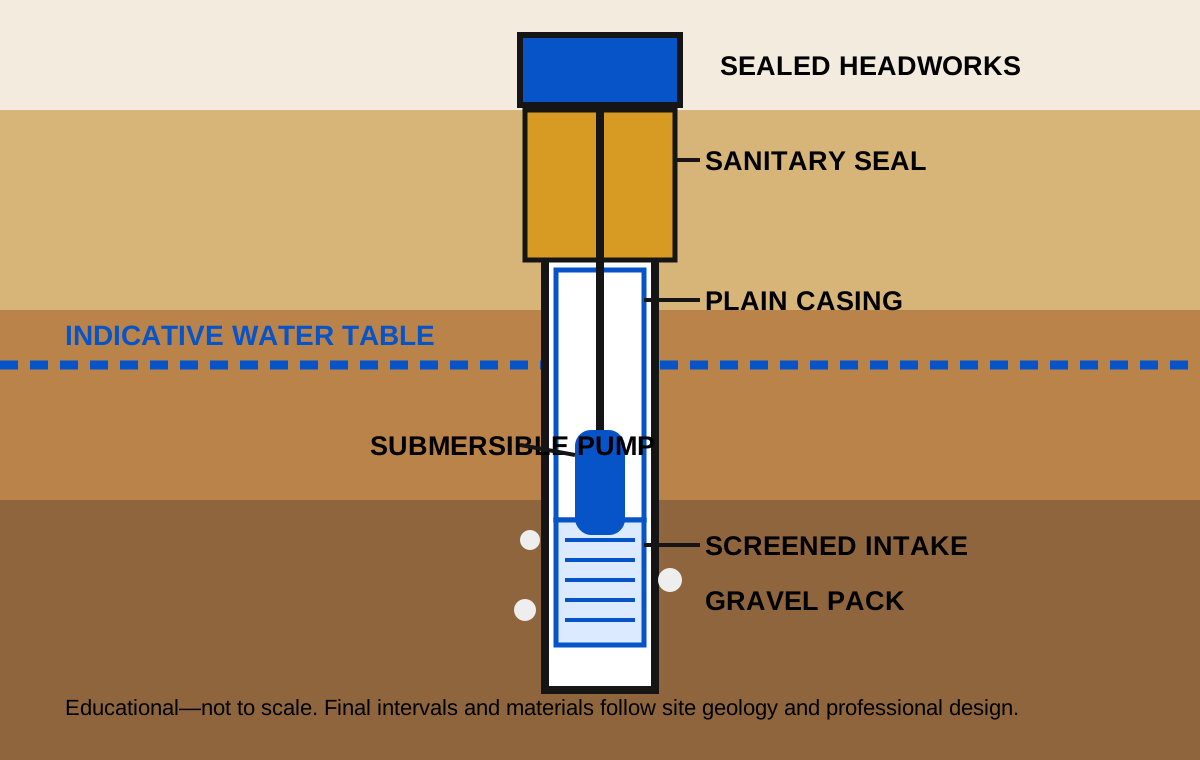
| Borehole construction and development | $— | Casing, screen, gravel pack and development scope where applicable |
| Test pumping and water testing | $— | Test scope, reports and laboratory package |
| Temporary pump/storage/distribution | $— | Construction-stage water arrangement |
| Permanent pump and storage | $— | Final building demand and tested borehole performance |
| Commissioning and handover | $— | Controls, records and transfer to the operations team |
Contract scope and variation control
A construction project should define borehole drilling for construction sites Kenya responsibilities in writing. The contract should state measurement rules, owner-provided access, temporary facilities, exclusions, variation approval and the documents required at completion.
Use borehole drilling contract Kenya for the contract checklist. This helps the main contractor, developer and drilling subcontractor understand which party is responsible for access preparation, water disposal, temporary storage and permanent connections.
Variation control is especially important on active sites because conditions can change quickly. New excavation, revised building layouts or access restrictions should be documented before additional work is approved.
Plan the permanent headworks before the site closes in
borehole drilling for construction sites Kenya should leave enough room for the permanent borehole headworks and future service access. A borehole that is convenient during early earthworks can become difficult to maintain if later construction surrounds it with walls, paving, plant or structures.
Coordinate the final headworks with the permanent site layout. See borehole headworks in Kenya for sanitary wellhead protection and maintenance considerations.
Commissioning before project handover
The final borehole drilling for construction sites Kenya handover should identify what is permanent, what is temporary and what still requires completion. The operations team should receive borehole construction records, test-pumping information, pump details, controls, water-quality results, treatment records where relevant and maintenance guidance.
Use borehole commissioning checklist Kenya to organize the handover. If the system is still running on temporary tanks or pipework, document the remaining permanent works clearly.
How to get started with borehole drilling for construction sites Kenya
Start by sharing the project location, development type, construction program, proposed permanent use and current site layout. Define the expected water uses during construction and identify who controls site access and temporary works.
Then request a borehole drilling for construction sites Kenya scope that separates survey, mobilization, drilling, testing, temporary supply and permanent equipping. Coordinate the drilling window with the main site program before the rig is dispatched.
After drilling, use the test and water-quality records to finalize the pump, storage and permanent distribution. Commission the system and retain the complete handover file.
borehole drilling for construction sites Kenya FAQs
When should a construction project drill a borehole?
The timing should follow the site program, technical siting process, approvals and access conditions. The drilling window should avoid conflicts with major site activities where practical.
Can the construction borehole become the permanent building supply?
Potentially, if the completed borehole, tested performance, water quality, pump, storage and distribution are designed for the finished property’s needs.
Should the final pump be installed immediately after drilling?
Not automatically. Test-pumping data and the permanent demand should guide the final pump choice. A temporary construction arrangement can be different.
How should site access be planned?
Share the current route, gate, drilling point and active-site constraints with the drilling contractor and coordinate equipment movement through the site’s competent management team.
Does construction water need laboratory testing?
Testing should match the intended use and project requirements. If the borehole will serve the completed property, plan the permanent water-quality objective as well.
What should be included in the borehole handover?
Keep construction records, test-pumping data, pump and control details, water-quality results, treatment information where relevant and commissioning notes.
How do I compare drilling quotations for an active construction site?
Separate survey, mobilization, drilling, construction, testing, temporary water, permanent equipment and handover so each contractor is compared on equivalent scope.
Make borehole drilling for construction sites Kenya part of the project plan
borehole drilling for construction sites Kenya delivers more value when it is coordinated with the project program from siting through final handover. Define temporary and permanent demand, protect access, test the completed source, then select storage and equipment from evidence.
The result is a borehole that supports construction without becoming an undocumented temporary installation—and, where planned, transitions cleanly into the completed property’s permanent water infrastructure.