
borehole airlifting Kenya is a professional borehole-development or cleaning method that can be used in suitable constructions to move water and loosened material during commissioning or rehabilitation. This guide explains what airlifting is intended to achieve, when it may be considered, what evidence should be recorded before and after the work, and why the method should be selected from borehole construction and condition rather than used as a generic cleaning package.
Why borehole airlifting Kenya needs a defined objective
borehole airlifting Kenya should begin with a clear reason for the work. On a new borehole, the objective may be development after drilling and construction. On an existing source, the objective may be to support cleaning or rehabilitation after evidence shows sediment, fines or another condition that the selected method can address. The same word can therefore describe different project stages.
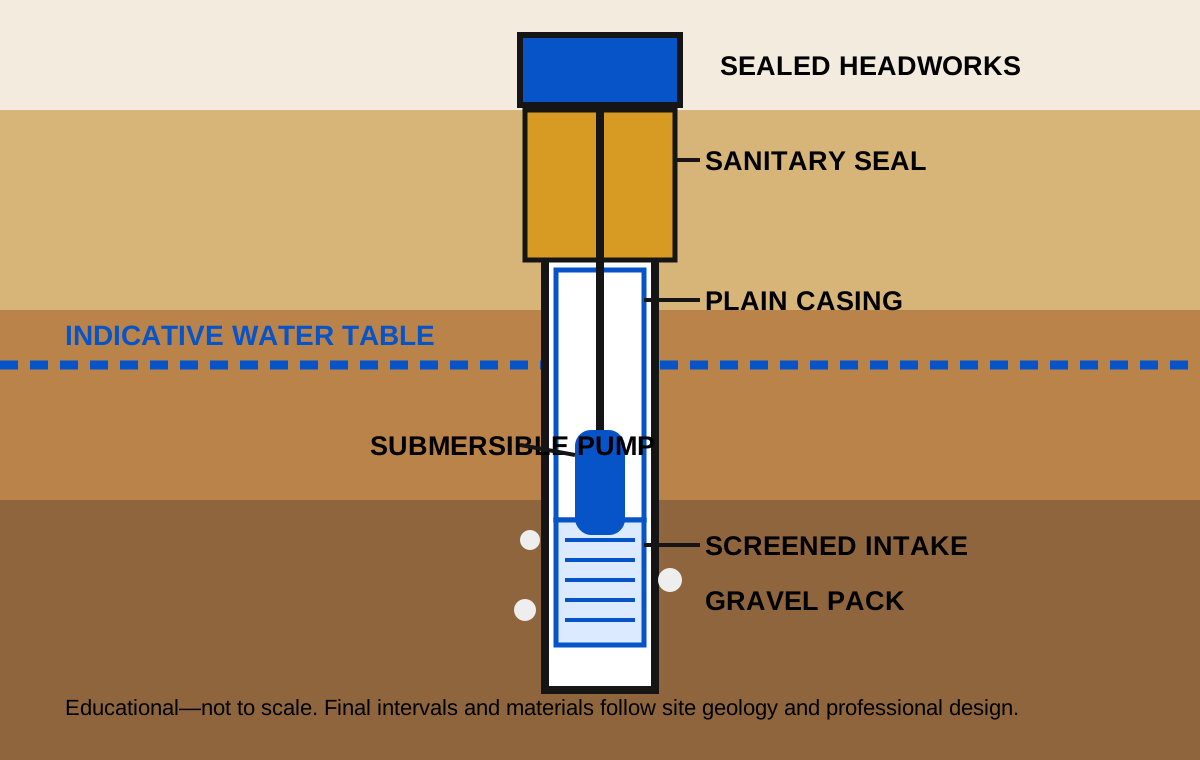
Before airlifting is specified, review the drilling log, casing and screen details, gravel-pack information where applicable, pump setting, recent flow, water levels and sediment history. The borehole gravel pack guide explains why screen, pack and development should be considered together in screened constructions.
Because borehole airlifting Kenya involves professional drilling and compressed-air equipment, it should be performed by qualified borehole personnel using equipment suited to the construction. This guide focuses on planning, evidence and outcomes rather than operational compressor instructions.
Borehole airlifting Kenya: step-by-step planning method
A good borehole airlifting Kenya project is planned around the borehole record and the required outcome. The contractor should explain why airlifting is appropriate, what condition will be monitored during the work, and how success will be verified after the intervention.
- Define the problem. New-borehole development, sediment, reduced performance and rehabilitation are different scopes.
- Review construction. Confirm casing, screen, packed intervals, final depth and any known obstructions.
- Record the baseline. Keep flow, water levels, sediment observations and pump condition where relevant.
- Select the method. Explain why airlifting suits the construction and objective rather than assuming it is always appropriate.
- Plan professional access. Identify pump removal, headworks access and equipment requirements as part of the service scope.
- Monitor the work. Record observations relevant to the objective instead of relying only on elapsed time.
- Verify performance. Repeat comparable flow, water-level or sediment checks after the borehole stabilizes.
- Update the handover file. Record the method, date, findings and new performance baseline.
A simple delivered-flow relationship is:
In plain English, average flow Q equals a measured volume V divided by the time t. A repeatable flow or tank-filling check can support before-and-after comparison.
How borehole airlifting Kenya differs from test pumping
borehole airlifting Kenya is not a substitute for a controlled pumping test. Development and cleaning aim to improve or establish the hydraulic connection and remove unwanted material, while test pumping measures how the completed source responds when water is abstracted under stated conditions.
After appropriate development, use the borehole test pumping Kenya guide to understand discharge, drawdown and recovery. Keeping the two stages separate makes the project record clearer.
Choosing the right borehole airlifting Kenya approach
The right borehole airlifting Kenya approach depends on whether the source is new or existing, the borehole construction, the material being removed and the evidence of performance loss. A contractor should not recommend airlifting only because it is available equipment.
| Situation | Possible role of airlifting | Evidence to review |
|---|---|---|
| New drilled borehole | Development where appropriate to construction | Drilling method, screen/pack, sediment and discharge observations |
| Existing borehole with sediment | Possible cleaning/development component | Construction record, pump setting, sand history and condition |
| Reduced hydraulic performance | Possible rehabilitation method if diagnosis supports it | Flow, static/pumping water levels and prior baseline |
| Low building pressure | Usually not a first-line response | Storage, booster, pressure controls and pipework |
| Water-quality complaint | Only if diagnosis links the issue to a condition the method can address | Laboratory results and construction history |
For hydraulic comparison, specific capacity can be expressed as:
In plain English, specific capacity SC is discharge Q divided by drawdown s under a stated pumping condition. Comparable pre-work and post-work values can help show whether hydraulic performance changed.
Worked example: borehole airlifting Kenya during rehabilitation
Imagine an older borehole where tank filling has become slower and sediment appears intermittently. Pump inspection does not fully explain the decline. Historical records show better hydraulic performance under a similar pumping condition. The contractor reviews the screen and construction record before proposing borehole airlifting Kenya as one part of a rehabilitation plan.
Pre-work flow and water-level measurements are documented. During the service, observations are recorded against the defined cleaning objective. After the source is reassembled and stabilized, comparable performance measurements are taken again. The owner can then judge the result from evidence rather than from the statement that the borehole was “cleaned.”
At another site, low pressure is found only after the storage tank. In that case, borehole airlifting Kenya would not address the actual fault. The diagnosis remains downstream in the pressure system.
| Illustrative project factor | Relative priority index |
|---|---|
| Construction review | 100 |
| Pre-work baseline | 92 |
| Method selection | 84 |
| Post-work verification | 80 |
Features of our borehole airlifting Kenya service
| Feature | What it supports |
|---|---|
| Construction-record review | Confirms whether the method suits the completed borehole |
| Condition diagnosis | Defines the sediment or performance problem being addressed |
| Pre-work measurements | Creates a baseline for later comparison |
| Professional equipment planning | Coordinates safe access, pump removal and drilling-service equipment |
| Observation record | Documents relevant material and condition changes during work |
| Post-work verification | Checks whether the intended hydraulic or sediment outcome improved |
| Updated handover file | Keeps the intervention useful for future maintenance |
Advantages of evidence-led borehole airlifting Kenya include:
- Clearer purpose because the method is linked to a diagnosed condition.
- Better rehabilitation decisions because construction is reviewed before equipment is mobilized.
- Measurable outcomes because flow and water levels can be compared before and after.
- Better sand diagnosis because sediment history is recorded with the work.
- Stronger handover records because the service method and observations remain with the property.
- Less unnecessary work when the actual fault is in the pump or distribution system.

Borehole airlifting Kenya pricing
borehole airlifting Kenya pricing depends on borehole depth, access, pump removal, construction, equipment mobilization, duration, the objective of the work and the measurements included before and after. A quotation should separate professional service scope from vague “cleaning” language.
| Scope | Indicative price | What to confirm |
|---|---|---|
| Condition and records review | $— | Construction, performance history and service objective |
| Pump removal/reinstallation if required | $— | Depth, cable, rising main and lifting scope |
| Airlifting/development service | $— | Professional equipment, method, observations and exclusions |
| Post-work performance verification | $— | Flow, water levels, sediment and reporting |
Borehole airlifting Kenya for a new borehole
After drilling and installation of the adopted completion, a new borehole needs appropriate development before final performance testing. borehole airlifting Kenya may be one professional development method where it suits the drilling and construction approach. The objective is to establish the intake and remove drilling-related fines or disturbed material as appropriate to the design.
Development should not be judged only by elapsed time. The contractor should record observations relevant to the construction and know when the borehole is ready for the next commissioning stage.
Borehole airlifting Kenya and gravel-packed screens
Where a screened and gravel-packed intake is used, borehole airlifting Kenya should be considered with the screen, pack and formation. Incomplete development can leave fines in or around the intake, while an unsuitable intervention can fail to address the real reason for sediment.
Keep the gravel-pack specification, installed interval and screen details with the development record. If sand problems appear later, those records help distinguish original construction from later operating changes.
Borehole airlifting Kenya for a sand complaint
Sand does not automatically prove that the borehole needs airlifting. A borehole airlifting Kenya proposal should follow diagnosis of pump setting, operating rate, screen or pack condition, formation material and whether sand was present from commissioning or appeared later.
The borehole pumping sand Kenya guide provides a broader diagnostic sequence. If airlifting is selected, document the expected outcome and verify sediment behavior after the system returns to normal operation.
Borehole airlifting Kenya and camera inspection
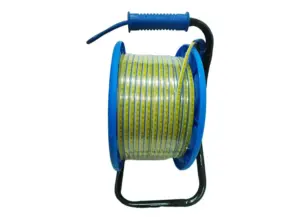
Some rehabilitation projects may combine visual inspection and borehole airlifting Kenya when the camera can answer a construction or condition question before work begins. Video is not mandatory for every airlifting project, but it can help when visible obstruction, casing condition or sediment accumulation is part of the diagnosis.
Use the borehole camera inspection Kenya guide to understand the strengths and limits of downhole video. Select each service because it adds evidence to the project.
Borehole airlifting Kenya and pump replacement
If the pump has already been removed for replacement and the service team observes sediment or unexpected borehole condition, the opportunity may justify a wider condition review. However, borehole airlifting Kenya should still have a defined objective and not be added automatically to every pump job.
Record the removed pump condition, old setting depth, water levels and any sediment observations. If source performance is normal, unnecessary rehabilitation can be avoided.
Records to keep after borehole airlifting Kenya
- Reason the service was selected.
- Drilling and construction records reviewed.
- Pre-work flow and water-level measurements.
- Pump model and setting depth if removed.
- Professional development/cleaning method used.
- Relevant observations during the work.
- Sediment or water-clarity observations.
- Post-work flow and water-level measurements.
- Parts or construction issues identified.
- Recommended operating and monitoring plan.
Common borehole airlifting Kenya mistakes
- Buying a generic “airlifting package” without diagnosis.
- Using the method for low building pressure without checking the distribution system.
- Ignoring the original casing, screen and gravel-pack record.
- Starting rehabilitation without a pre-work flow or water-level baseline.
- Assuming every sand complaint has the same cause.
- Treating elapsed work time as proof of success.
- Failing to complete proper post-work performance checks.
- Discarding service records after the borehole is reassembled.
How to get started with borehole airlifting Kenya
Gather the drilling log, construction record, pump details, pumping-test report and recent maintenance history. Explain whether the issue is a new-borehole development requirement, sediment, reduced flow or another condition. Then request a quotation that states why borehole airlifting Kenya is proposed and how the result will be verified.
The strongest service plan gives you a pre-work baseline, a documented professional intervention and a post-work result. That makes the work easier to audit and more useful for future maintenance.
Borehole airlifting Kenya FAQs
What is borehole airlifting?
It is a professional method used in suitable boreholes to move water and material during development or selected rehabilitation work.
Is airlifting the same as test pumping?
No. Development or cleaning and controlled test pumping have different objectives and should be recorded separately.
Does every new borehole need airlifting?
The development method should suit the drilling method, construction and site conditions rather than be assumed for every borehole.
Can airlifting fix a borehole that pumps sand?
It may be part of a solution when diagnosis supports it, but sand can have several causes involving construction, pump setting, operating rate or formation conditions.
Should flow be measured before and after rehabilitation?
Yes. Comparable performance measurements help show whether the intervention achieved the intended outcome.
Can airlifting solve low building pressure?
Not when the source and tank filling are normal and the pressure problem is downstream. Diagnose the complete water system first.
What records should I keep?
Keep the reason for work, construction record, baseline measurements, method, observations and post-work verification.
Make borehole airlifting Kenya measurable
borehole airlifting Kenya should be selected for a defined construction or rehabilitation objective, completed by qualified borehole professionals, and verified with measurements that match the original problem. Keep the construction record, baseline, service observations and post-work results together so future maintenance starts with evidence.
Borehole airlifting Kenya and post-work recovery
After borehole airlifting Kenya, allow the project record to show what happened after the active service stage. The borehole may need to stabilize before final flow, water-level or sediment observations are treated as the new baseline. Record when measurements were taken relative to the work so future comparisons are meaningful.
If the original complaint involved reduced hydraulic performance, repeat the same type of controlled flow and water-level check used before the work. If the complaint involved sediment, record whether the material returns during normal pumping and under what operating condition. This keeps borehole airlifting Kenya focused on the actual outcome instead of the visual impression during cleaning.
Borehole airlifting Kenya for farms and high-demand sites
Farms, schools, apartments and commercial properties can have long pumping windows and large daily demand. When a high-demand site develops a flow problem, do not assume that borehole airlifting Kenya is automatically the answer. First compare demand with the tested source, inspect the pump and controls, and review whether the operating pattern changed.
If rehabilitation is justified, plan service timing around reserve storage and site continuity. A well-documented intervention should show the condition before work, the reason airlifting was selected and the verified performance after the system returns to service.
Borehole airlifting Kenya and water quality
Airlifting can move sediment and disturbed material during development or selected rehabilitation, but borehole airlifting Kenya is not a substitute for laboratory water testing. If the concern is taste, fluoride, hardness, salinity, microbiological quality or another chemistry issue, collect appropriate samples and design treatment from the result.
The borehole water testing and treatment Kenya guide explains why water-quality decisions should be separated from mechanical development work. Keep both records in the borehole file if the project involves source rehabilitation and treatment.
Borehole airlifting Kenya handover checklist
- State the diagnosed problem and why airlifting was selected.
- Attach the relevant drilling and construction records.
- Record the pre-work flow, water levels and sediment condition.
- Identify pump equipment removed and reinstalled.
- Record observations made during professional service.
- Document any additional defects or obstructions found.
- Repeat the relevant performance measurements after work.
- Record the new operating baseline and any restrictions.
- Keep the service date and contractor report with future maintenance records.
This handover gives borehole airlifting Kenya a measurable place in the source history. If the same symptom returns, the next technician can see whether the previous intervention produced a durable change and what conditions existed at the time.