
borehole water cloudy after drilling Kenya is a common concern when a new or recently worked borehole produces water that looks hazy, carries fine particles or changes appearance after pumping. This guide helps you separate likely borehole-development, sediment, storage and water-quality causes, decide what evidence to collect, and choose safe next steps before buying treatment equipment.

Why borehole water cloudy after drilling Kenya matters
borehole water cloudy after drilling Kenya should not be dismissed as “normal” without checking what is causing the appearance. Fine formation material, incomplete development, disturbed sediment, air, iron-related color, storage contamination or another water-quality issue can look similar to a property owner even though the correct response is different.
The safest approach is to identify where the cloudiness begins and whether it changes during pumping. A sample taken directly from the raw-water line can tell you something different from a sample collected after a tank, filter or building plumbing system. Therefore, keep the source and downstream system separate during diagnosis.
If visible sand or grit is present, also review why a borehole is pumping sand in Kenya. That page focuses on persistent solids and borehole construction rather than general cloudy appearance.
Diagnostic tip: do not assume every cloudy sample needs the same filter. First establish whether the material is coming from the borehole, storage, treatment or distribution system.
borehole water cloudy after drilling Kenya: step-by-step method
A structured borehole water cloudy after drilling Kenya investigation starts with observation and records, then moves to testing and professional inspection where needed. The goal is to avoid changing the pump or adding treatment before you know whether the issue is hydraulic, construction-related or chemical.
- Identify the first point where cloudiness appears. Compare raw borehole water with tank and tap water using clearly labelled samples.
- Record when it happens. Note whether the water is cloudy at startup, after long pumping, all the time or only after a system change.
- Look for settled material. A technician can use the appearance and settled solids as one clue, but not as the final diagnosis.
- Review drilling and development records. Confirm how the borehole was developed and what completion information was handed over.
- Review pump setting and tested yield. Pump operation should be checked against the borehole’s documented performance.
- Check storage and downstream equipment. Tanks, filters and plumbing can introduce or retain material even when raw water is clearer.
- Arrange appropriate water testing. Use testing to separate suspended material from chemistry or microbiological concerns.
- Choose corrective work from evidence. Development, rehabilitation, pump changes or treatment should follow the identified cause.
- Verify after corrective work. Repeat comparable observations and testing so the improvement is documented.
A simple monitoring relationship for a measured clarity or turbidity indicator can be written as:
In plain English, the change equals the later measured indicator minus the earlier one. The values are useful only when the same method and comparable sampling points are used.
How to diagnose borehole water cloudy after drilling Kenya
For borehole water cloudy after drilling Kenya, diagnosis should begin with the timeline. If the issue has existed from first pumping, the drilling and development records deserve attention. If clear water later became cloudy, investigate what changed: pump setting, abstraction pattern, borehole condition, storage, treatment or plumbing.
Also distinguish a cloudy appearance from visible coarse sand. Fine suspended particles may stay in the water longer, while heavier grains can settle quickly. Color can also come from dissolved or precipitated constituents, which means visual inspection alone is not enough to choose a treatment process.
Where the borehole needs condition assessment rather than simple water testing, borehole camera inspection Kenya explains when downhole video may help a professional investigation.
Development can affect borehole water cloudy after drilling Kenya
borehole water cloudy after drilling Kenya can be associated with the development stage of a newly completed borehole. Development is the professional process used after drilling and completion to remove disturbed fines and improve the connection between the borehole and the water-bearing formation. The exact method depends on construction and geology.
If a new borehole never reached a stable, acceptable condition after development, ask the contractor for the development record and completion details. Do not attempt to improvise high-pressure or compressed-air procedures yourself; professional development uses equipment and methods selected for the specific borehole.
For a safe overview of one professional method, read borehole airlifting Kenya. It explains the purpose and verification of airlifting without turning it into a do-it-yourself procedure.
Pump setting and abstraction pattern need review
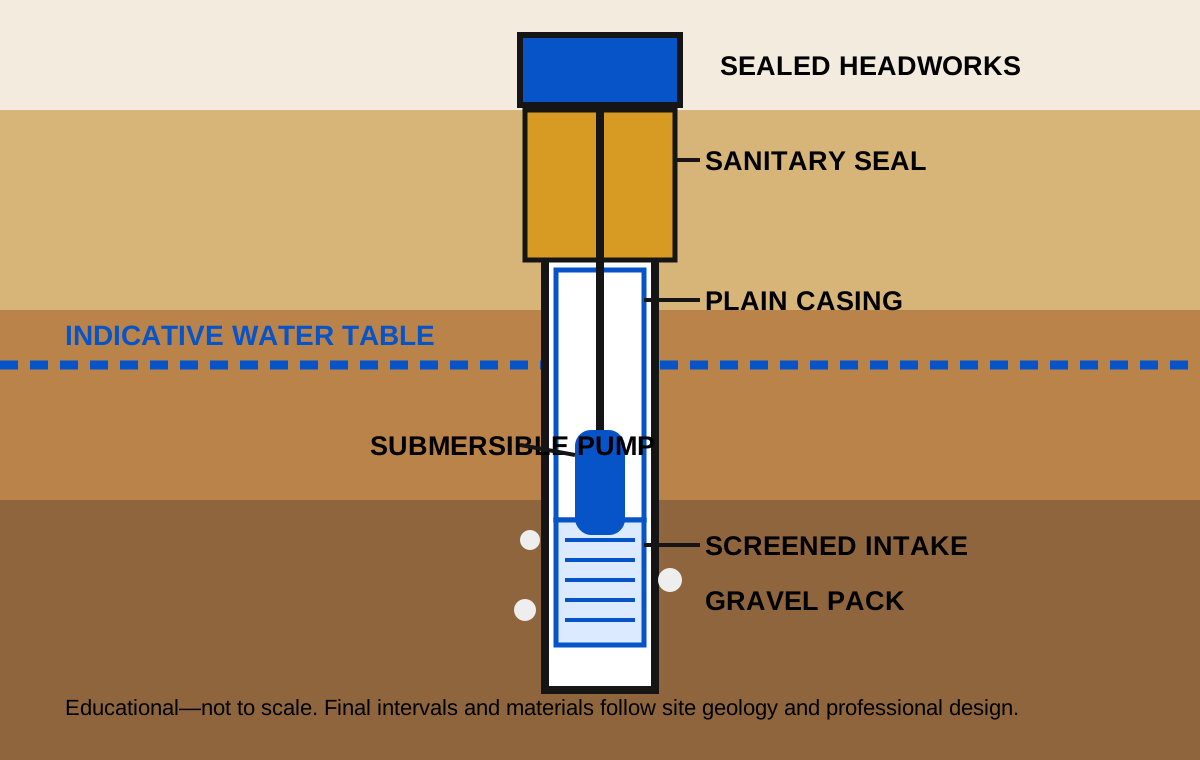
Another borehole water cloudy after drilling Kenya question is whether the pump is operating in a way that disturbs material or exceeds what the completed borehole can deliver cleanly. Pump setting, pumping level, tested yield and operating schedule should be reviewed together rather than changing horsepower from appearance alone.
A pump installed too close to an unsuitable intake zone or operated outside the borehole’s intended duty can complicate diagnosis. However, the correct setting cannot be determined from a generic depth rule. Use the borehole construction log and pumping-test information.
See borehole pump installation depth and borehole test pumping Kenya for the separate pump-setting and source-performance decisions.
Storage can make clear source water look cloudy later
borehole water cloudy after drilling Kenya is not always a borehole problem. If raw water is clear at the source but cloudy after storage, inspect the tank, inlet arrangement, settled material, cleaning history and any downstream filters. A tank can accumulate sediment that is later disturbed by inflow or maintenance.
Sample before and after storage when possible. Clearly label the samples and collect them using the method required for the test. This helps avoid paying for borehole rehabilitation when the actual problem sits farther downstream.
If the system has a large storage component, use borehole water tank size Kenya to understand how storage fits into the wider water-delivery design.
Water chemistry can mimic a sediment problem
A cloudy or discolored sample can lead owners to assume the borehole is producing soil, but borehole water cloudy after drilling Kenya can also involve water chemistry. Some constituents can change appearance after water is exposed to air, stored or treated. That is why laboratory testing is important before specifying a filter.
For example, a visible color or deposit can point a treatment professional toward additional testing, but the appearance by itself is not a reliable concentration measurement. The treatment design should be based on the actual report, flow and intended use.
If staining or metallic-looking deposits are part of the problem, review how to remove iron from borehole water in Kenya after testing confirms iron is relevant.
What to test when the water stays cloudy
When borehole water cloudy after drilling Kenya persists, testing should be chosen around the observed problem and intended use. A treatment professional or laboratory can advise on the appropriate physical, chemical and microbiological panel. The key is to avoid using one quick field reading as a complete safety decision.
Record whether the sample is raw borehole water, tank water or treated water. If the investigation compares points, collect them in a way that allows a meaningful comparison. Keep the laboratory reports with the drilling, pumping-test and commissioning records.
Use borehole water testing price in Kenya to understand how different test scopes can affect the laboratory quotation.
Worked example: tracking cloudiness through the system
The chart below uses illustrative data only. It shows how a site team might record a normalized clarity index at three locations. The figures are not real test limits or treatment targets; they simply demonstrate why the point of measurement matters in a borehole water cloudy after drilling Kenya investigation.
| Illustrative point | Cloudiness index | Purpose |
|---|---|---|
| Raw borehole | 78 | Source baseline |
| After storage | 48 | Check downstream change |
| After corrective work | 24 | Verification comparison |
A second simple relationship can describe the proportion of delivered water meeting an agreed clarity check during a documented trial:
In plain English, the monitoring ratio equals the volume meeting the agreed clarity check divided by the total monitored volume. The criterion itself should come from the project or testing plan, not from this illustrative formula.
Features of our borehole water cloudy after drilling Kenya review
| Feature | What it helps establish |
|---|---|
| Timeline review | Whether cloudiness began at commissioning or developed later |
| Sampling-point comparison | Whether the source, tank or downstream system is responsible |
| Completion-record review | How the borehole was constructed and developed |
| Pump-duty review | Whether pump setting and operation match borehole evidence |
| Water-quality review | Whether chemistry or microbiology needs investigation |
| Corrective-scope review | Whether development, rehabilitation or treatment is appropriate |
| Verification plan | How the site will confirm improvement after work |
Advantages of a structured borehole water cloudy after drilling Kenya investigation include:
- Fewer guessed repairs because the source of cloudiness is identified first.
- Better treatment selection because laboratory evidence supports the equipment choice.
- Clearer contractor discussions because drilling and development records are reviewed.
- Better pump decisions because pump setting is checked against borehole performance.
- Stronger verification because before-and-after observations use comparable points.
- Lower cannibalization of effort because storage and source problems are not treated as the same issue.
borehole water cloudy after drilling Kenya pricing
borehole water cloudy after drilling Kenya pricing depends on the actual cause. A site may need only sampling and testing, while another may require professional development, rehabilitation, camera inspection, pump work or treatment equipment. No verified universal price fits all causes, so the table keeps amounts at $— until diagnosis defines the scope.
| Possible scope | Indicative price | Confirm before approval |
|---|---|---|
| Site assessment and sampling | $— | Sampling points and diagnostic scope |
| Laboratory water testing | $— | Required panel and report |
| Professional borehole development | $— | Method, equipment and verification |
| Camera / condition inspection | $— | Depth, video scope and report |
| Treatment equipment | $— | Raw-water report, flow and capacity |
| Verification testing | $— | Before-and-after sample plan |
A borehole water cloudy after drilling Kenya quotation should describe the diagnosis and corrective outcome, not only an equipment name. Ask what evidence supports the recommended work and how success will be checked.
When rehabilitation may be considered
If borehole water cloudy after drilling Kenya appears together with declining performance, persistent solids or evidence of a borehole-condition problem, a professional may consider rehabilitation after diagnosis. Rehabilitation is not the same as adding a household filter; it addresses the condition or performance of the source itself.
The correct method depends on the identified cause and construction details. Avoid aggressive do-it-yourself cleaning or chemical procedures because inappropriate work can damage the borehole or create a water-quality problem.
See borehole rehabilitation Kenya for the decision process, evidence and verification that should accompany professional restoration work.
When treatment equipment may be the better answer
In other cases, borehole water cloudy after drilling Kenya is better addressed in the water-treatment system. This is more likely when the borehole is hydraulically stable and the problem is a confirmed water-quality parameter or a downstream storage issue rather than a structural source problem.
Treatment should be sized from the raw-water report, required finished-water quality, peak flow and daily volume. If filtration is recommended, ask what material it is intended to remove and how the unit will be monitored and maintained.
Use borehole water treatment systems in Kenya to compare treatment decisions without assuming one filter works for every cloudy-water cause.
What to keep in the handover file
A new borehole water cloudy after drilling Kenya case is easier to resolve when the owner has complete records. Keep the drilling log, construction details, development record, pumping-test report, pump setting, water-quality results, commissioning notes and any later treatment or rehabilitation reports.
Add photographs or short observations when the water changes visibly. Record whether the sample was taken directly from the raw-water line, tank or tap. These notes can help a technician understand whether a later change is new or has existed since commissioning.
For the wider handover process, see borehole commissioning checklist Kenya.
Common borehole water cloudy after drilling Kenya mistakes
- Assuming every cloudy sample is harmless drilling residue.
- Replacing a pump before checking development, construction and tested yield.
- Buying a filter without a laboratory or diagnostic basis.
- Collecting all samples after the tank and never checking raw borehole water.
- Confusing fine suspended material with coarse sand or chemical discoloration.
- Ignoring storage-tank sediment and downstream plumbing.
- Attempting aggressive development or chemical cleaning without professional assessment.
- Failing to repeat comparable testing after corrective work.
How to get started with borehole water cloudy after drilling Kenya
Start by documenting when the cloudiness began and where it first appears. If possible, compare raw borehole, storage and downstream samples using an appropriate sampling method. Gather the drilling, development, pumping-test and pump-installation records before a contractor recommends corrective work.
Next, arrange the testing needed to distinguish visible suspended material from a water-chemistry or microbiological issue. A borehole water cloudy after drilling Kenya diagnosis should combine those results with the borehole’s performance history.
Finally, agree how success will be verified. Whether the answer is further professional development, rehabilitation, pump work, storage cleaning or treatment, repeat the relevant observation or test at a comparable point after the work.
borehole water cloudy after drilling Kenya FAQs
Why is borehole water cloudy after drilling Kenya?
Possible causes include disturbed fine material, incomplete development, persistent solids, storage sediment or water chemistry. The cause should be diagnosed before treatment or repair is selected.
Will cloudy water always clear by pumping longer?
No. Some new boreholes improve during professional development, but persistent cloudiness can signal another issue. Use construction, development and water-quality evidence rather than assuming more pumping is always the answer.
Is cloudy water the same as sand in the borehole?
No. Visible coarse sand, fine suspended particles and chemical discoloration can look different and can require different investigations.
Should I install a sediment filter immediately?
Not before identifying the source. A filter may manage downstream solids, but it does not correct every borehole-development, construction or chemistry problem.
Can the storage tank make borehole water cloudy?
Yes. Sediment or disturbed deposits in storage can change downstream appearance even when raw water is clearer, so compare sample points.
When is borehole rehabilitation considered?
It may be considered when diagnosis points to a source-condition or performance problem that professional rehabilitation can address.
How do I verify that corrective work succeeded?
Repeat comparable observations and the relevant testing at clearly labelled sample points, then keep the results with the borehole records.
Resolve borehole water cloudy after drilling Kenya with evidence
borehole water cloudy after drilling Kenya is a symptom, not a diagnosis. The most useful next step is to find where the cloudiness starts, compare it with the borehole’s construction and pumping records, and use appropriate testing to decide whether the issue belongs to the source, pump, storage or treatment system.
A careful borehole water cloudy after drilling Kenya investigation helps you avoid buying the wrong equipment or carrying out unnecessary repair work. Document the baseline, choose corrective work from evidence and verify the result after the intervention.